
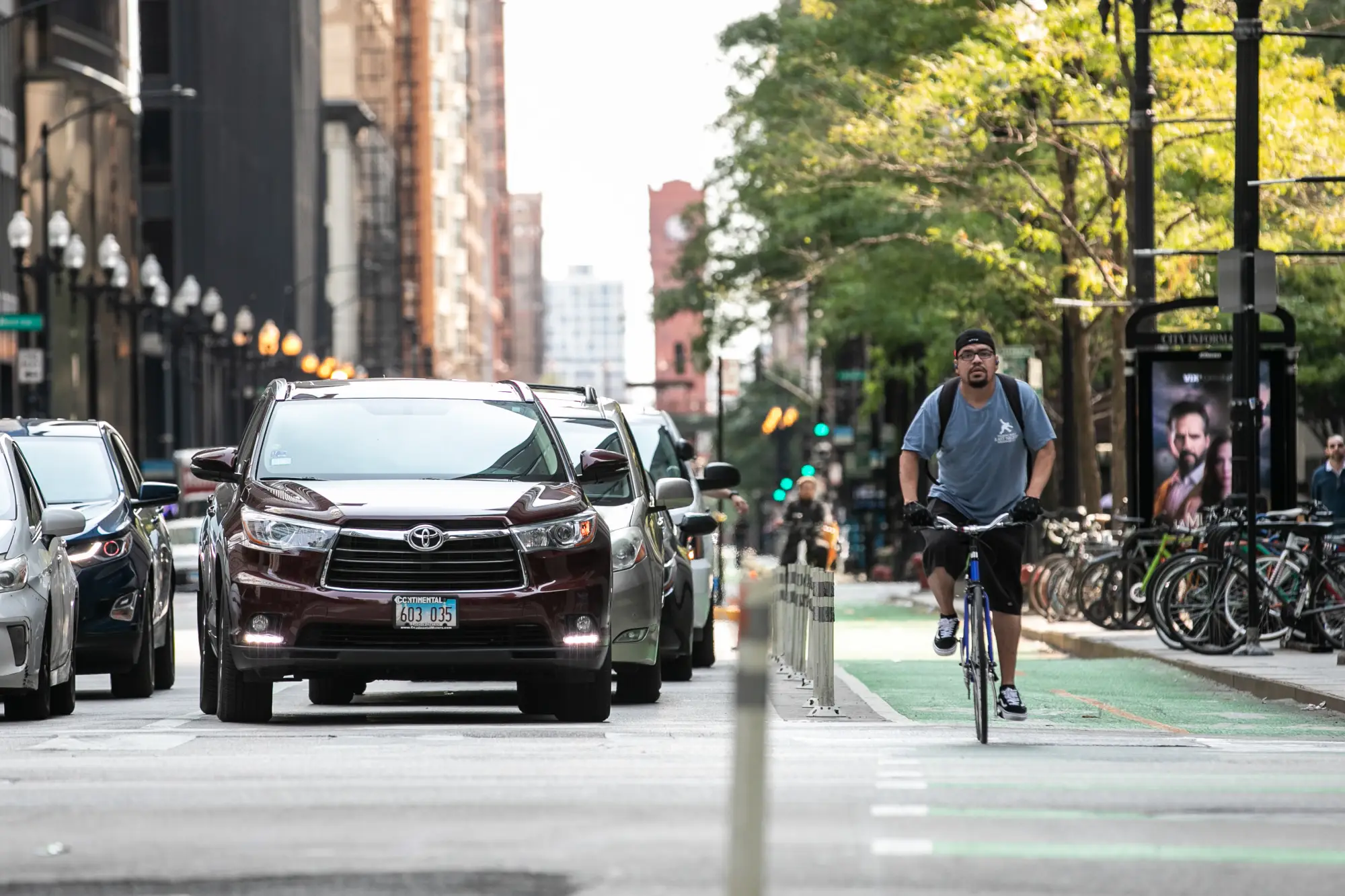
A biker rides beside cars down a protected bike lane in the Loop.
- Health & Wellness
- Sports
How to Bike Safely in Chicago
City thoroughfares can feel downright scary on two wheels. The trick is building your personal map of low-stress routes.
“Jeez, I could never bike in Chicago,” say many, many people when talking to someone who gets around by bicycle all the time. They think about their car trips and envision themselves on a bike in that traffic, or remember cyclists darting in between cars and running red lights, and they react with terror.
What doubters need to know is that you can bike in Chicago without needing to emulate dare-devil cyclists. There are safe ways to get around Chicago on a bike for even the most cautious.
Choose streets that are better for biking.
The first thing to know is that the streets you want to bike on are not the streets you want to drive on. At the risk of stating the obvious, cars are dangerous to bicyclists. Therefore, the cyclists should go where the cars are not.
“I think many people who are new to biking will be choosing the most direct route, which will often bring them to roads with heavy traffic and no bike infrastructure,” said Ted Villaire, a spokesman for the Active Transportation Alliance. “I would say without equivocation that newbies should avoid these streets.”
There’s a wide range of levels of bike-friendliness. Setting aside highways where it isn’t legal to ride a bike, the worst streets for biking are Ashland, Western, Cicero and the ilk, where there are multiple lanes of traffic in both directions, a parking lane, and no bike infrastructure. “Not all roadways are made for cyclists,” said David Powe, an assistant commissioner at the Chicago Department of Transportation.
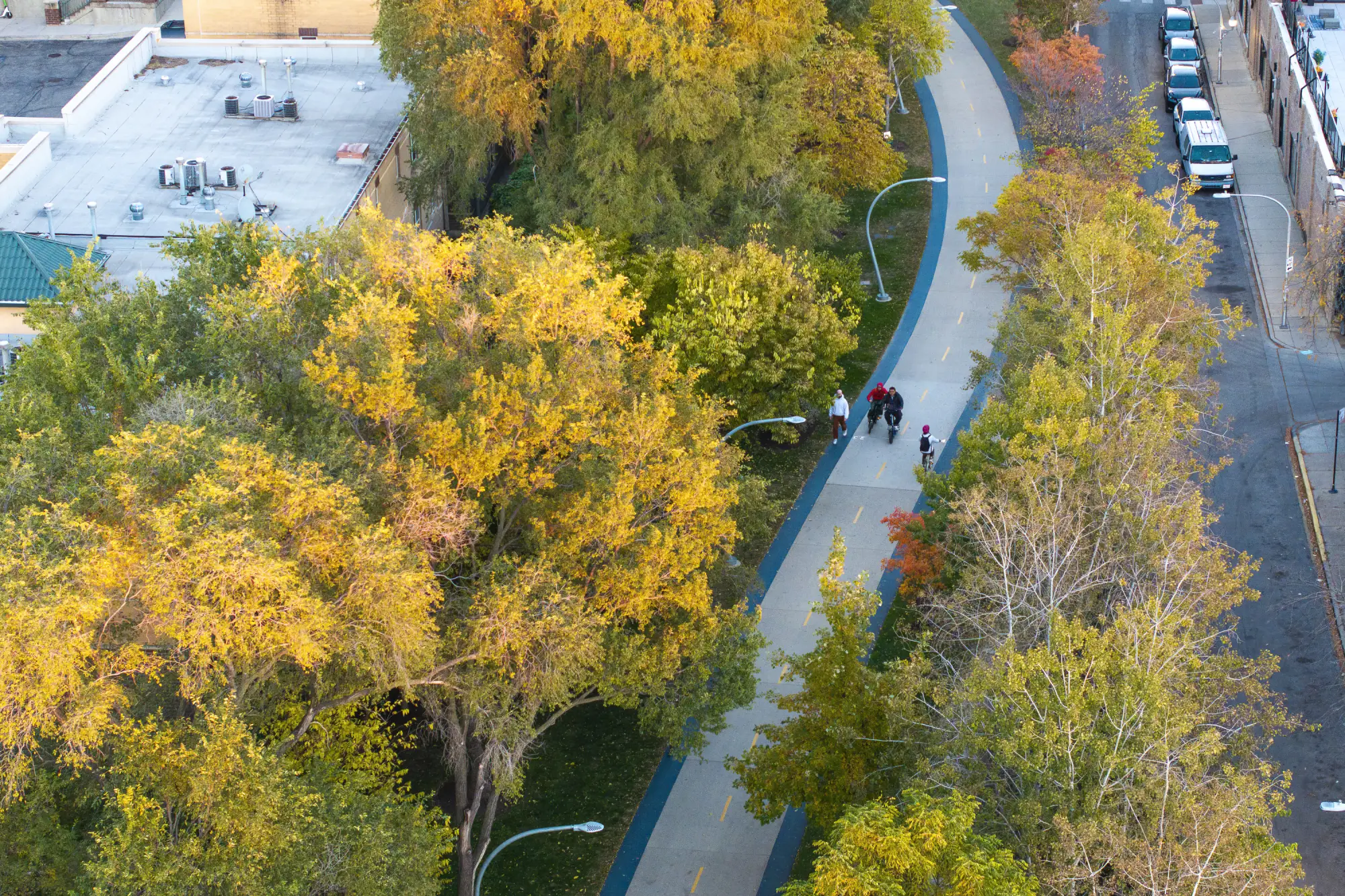
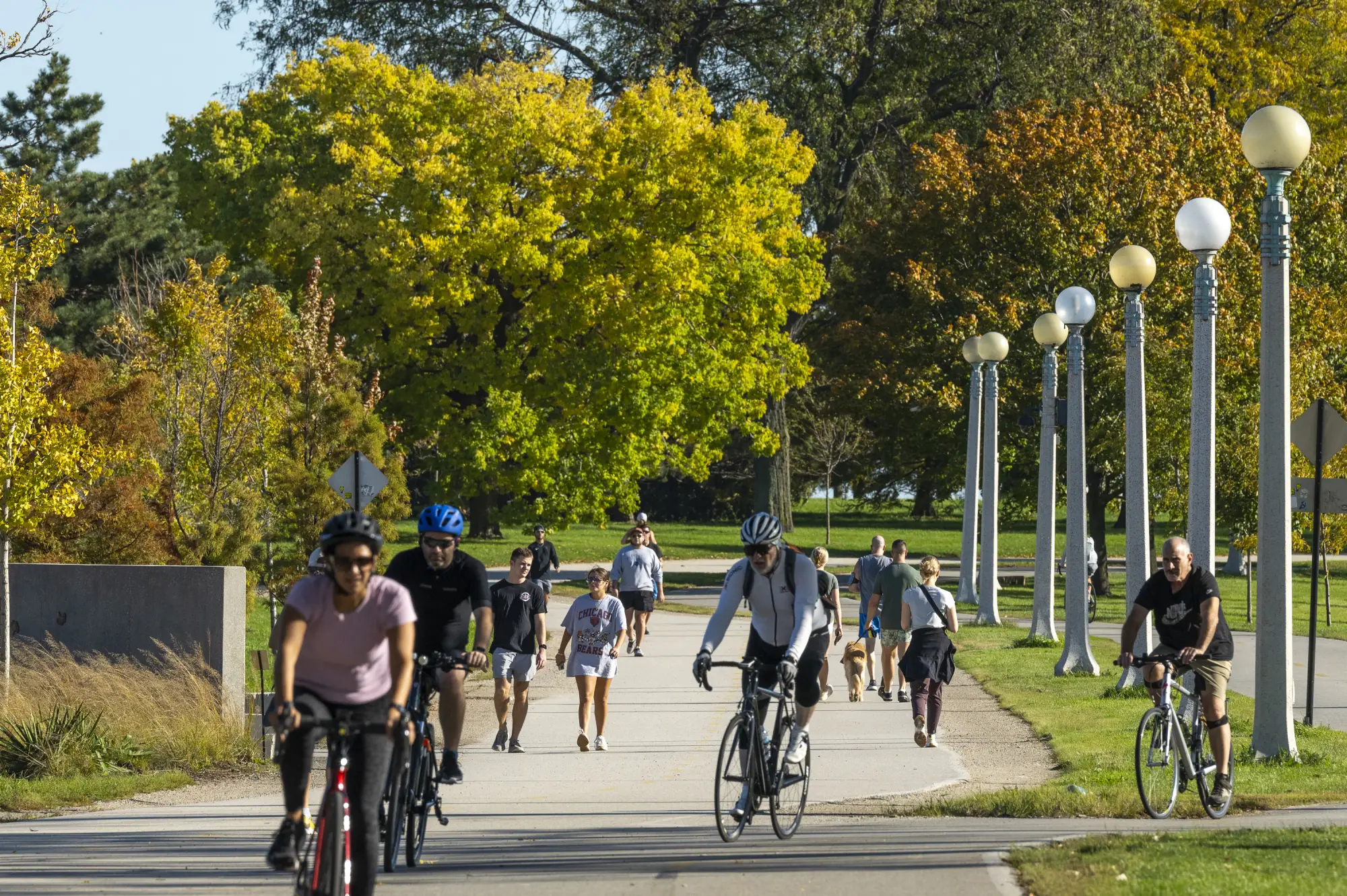
The best are off-street paths where cars are not permitted, such as the lakefront trail or the 606. In between, there are the quiet residential side streets and any number of midsize streets with various types of protection for cyclists.
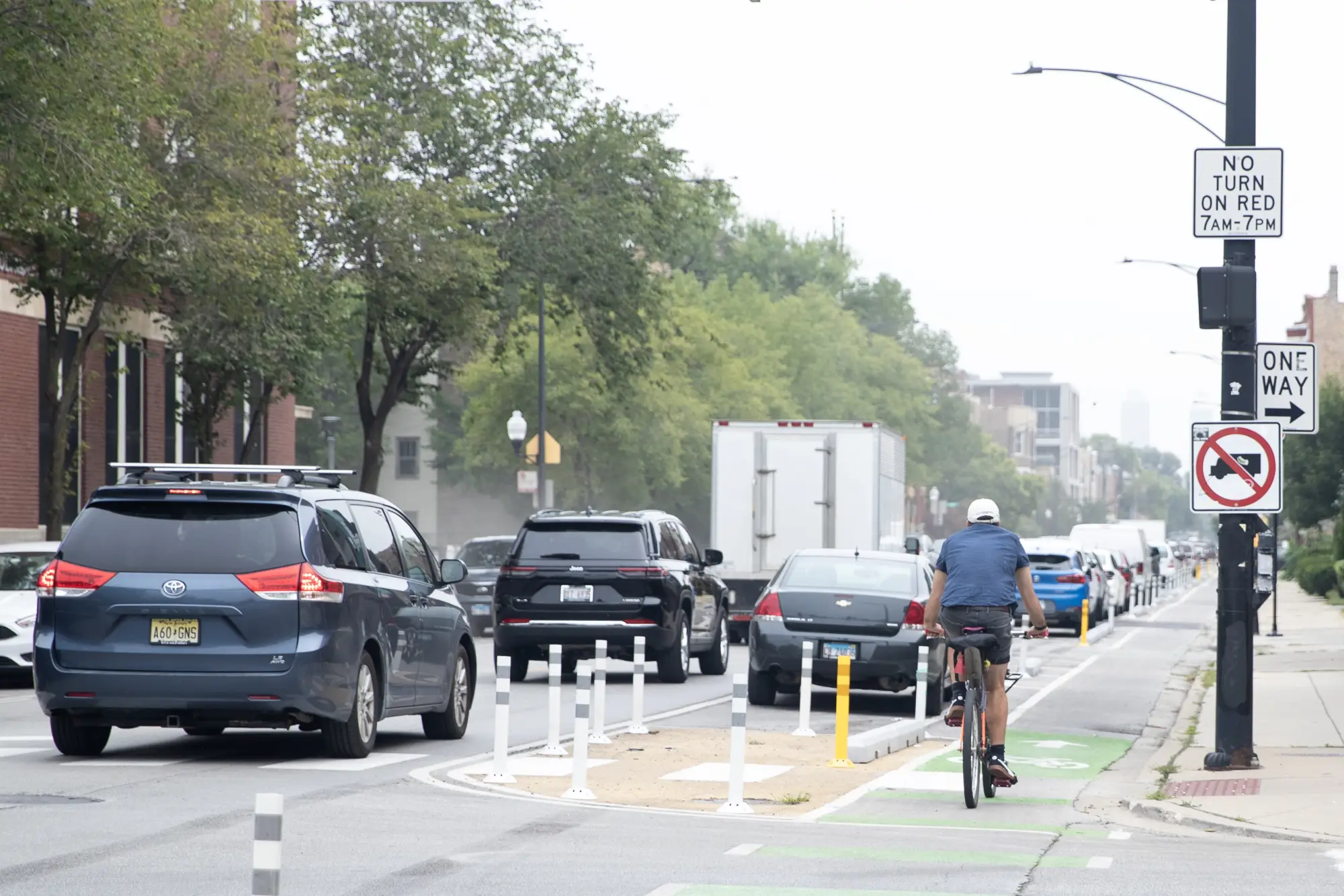
The best bike lanes are protected bike lanes. “That means that the bike lane itself is physically separated with a curb of some kind or plexi posts or some sort of delineator from vehicular traffic,” Powe said. “Those are the safest bikeways.”
Some streets have been designated as “greenways,” with striping on the pavement to key people in. “Those are shared green markings on a neighborhood street with a low volume of traffic, where we almost always put some sort of pedestrian safety infrastructure that slows cars down,” Powe said. Speed bumps, curb bump-outs or raised crosswalks are examples. Many greenways also have so-called contraflow lanes, bike lanes that make a street two-way for bikes but one-way for cars.
Then there are buffered bike lanes, where the same sort of no-man’s-land in a protected bike lane separates the bikes from the cars, but only painted on the street, without the curb or posts. These aren’t as good because double-parked cars or delivery vehicles often block them (illegally) and force cyclists to merge with the car traffic.
There are also bike lanes without buffers. “[It’s] just paint on the road, and we like to say they’re better than nothing,” Villaire said.
Use apps, but trust your comfort level.
So how is an aspiring bicyclist to find a route that makes good use of low-stress bikeways? The simple answer is that it’s not simple.
The major mapping services such as Google Maps, Apple Maps and Mapquest will give bike directions, but they have blind spots about some off-street bike paths and do not always avoid the Ashlands. More bike-oriented apps such as Komoot, Ride with GPS and AllTrails do better at keeping to safer streets, but they optimize routes where some cyclists might prefer a one-block detour to get to an off-street path.
The issue with any auto-generated map is that different cyclists have different priorities and tolerances. “When I’m talking to someone who’s a new cyclist,” Powe said, “I want to understand—how comfortable are you?” Some people might not want to ride on a biggish street with a painted bike lane. Some people might not accept buffered bike lanes.
Then there’s the purpose of the bike ride. A ride that’s a weekend jaunt to a brewery might call for different priorities than a commute to work. Maybe you could save five minutes on a one-hour ride by taking medium-size streets with decent bike infrastructure instead of the lakefront path, but wouldn’t you rather take the lakefront path? Unlike car-route mapping, which for the most part is one size fits all, bike-route mapping has considerations that one single optimizing algorithm can’t cover.
Build a route that feels right for you.
Best is to roll up your sleeves and plan it yourself. CDOT produces a map of bike infrastructure that’s updated every spring. Print copies can be picked up for free at aldermanic offices and bike shops all over the city. The Mellow Bike Map, based on a crowdsourced project headed by Streetsblog editor John Greenfield, excels at identifying small residential streets to bike on. “A narrow street means slower-moving drivers,” Villaire said.
Start with a major mapping service’s first draft. Then find the flaws in its route, using Street View if you need to gauge how busy a road is or whether there’s a shoulder or what an interchange looks like, and cross-reference the bike-friendly maps to edit the route. Go off the direct route to stay on safer streets. Detour through parks. Off-street bike paths are gold.
Then get out and try it. You might find other places to improve the route once you’re actually out there in the world. Room for improvement on a route isn’t necessarily a liability. If you’re out there biking, it’s about the journey, not the destination.