
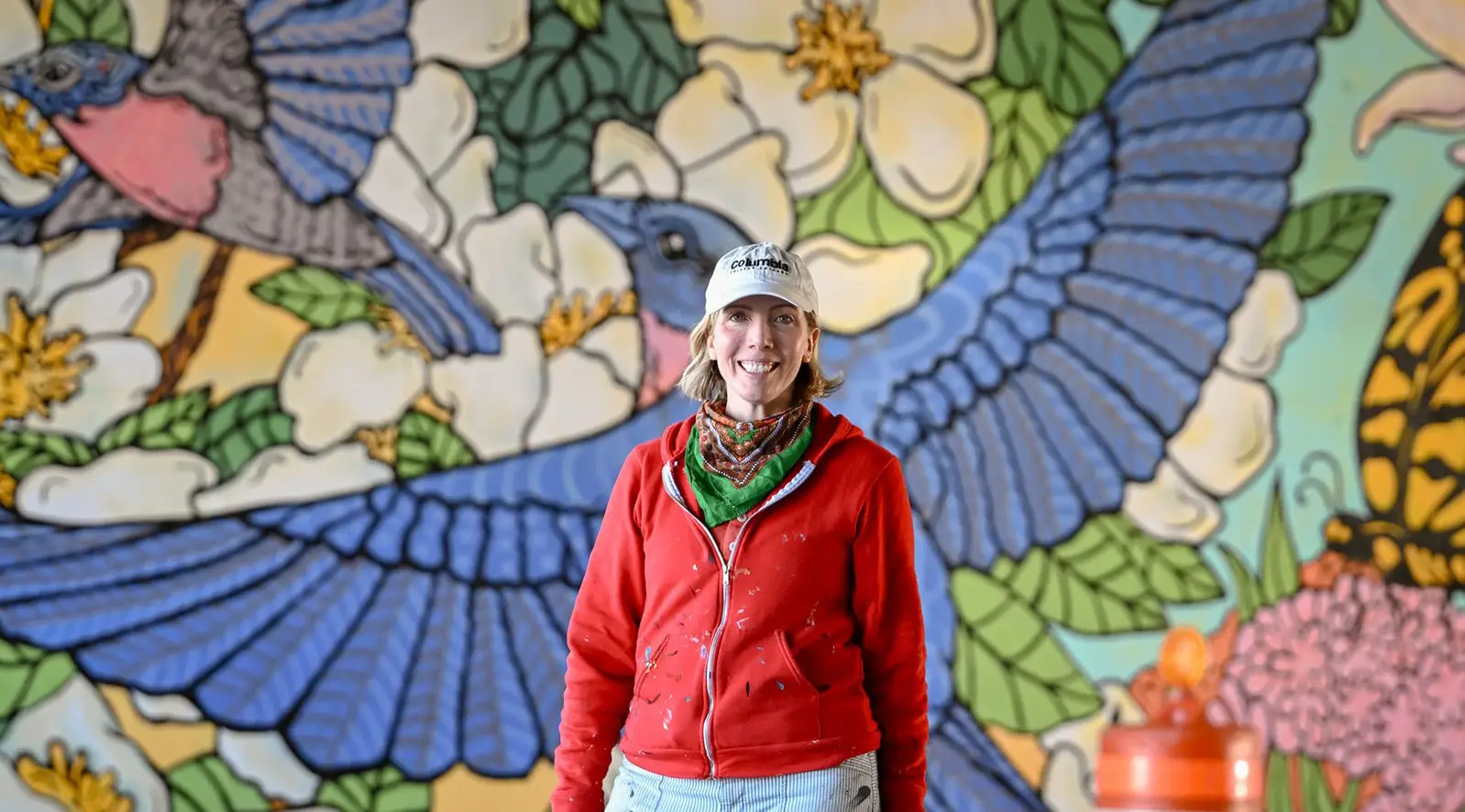
Cheri Lee Charlton stands in front of “Day Into Night,” a mural in an underpass near West La Salle Drive and North Lake Shore Drive in Lincoln Park.
- Arts & Culture
How to Bring Public Art to Your Neighborhood
From finding the right wall to lining up funding and long-term upkeep, here’s how to turn a drab spot into a local landmark.
· Updated
Looking to bring public art to your neighborhood? The first step is to figure out the location. Without that, your project might never get off the ground.
That’s according to Lea Pinsky, an artist and muralist who has painted and coordinated others to paint dozens of murals around Chicago and Evanston. She is executive director and mural program co-director at Art Encounter, a nonprofit based in Evanston. Art Encounter’s Evanston Mural Arts Program partners artists with community groups to create large-scale public art.
Start with the right location — and get permission.
“The first thing to do is to determine a feasible location, as that can be the anchor for the whole endeavor,” Pinsky said. That “might seem obvious, but you’d be surprised!”
An important detail to consider when looking for the perfect site for public art is the owner of the property.
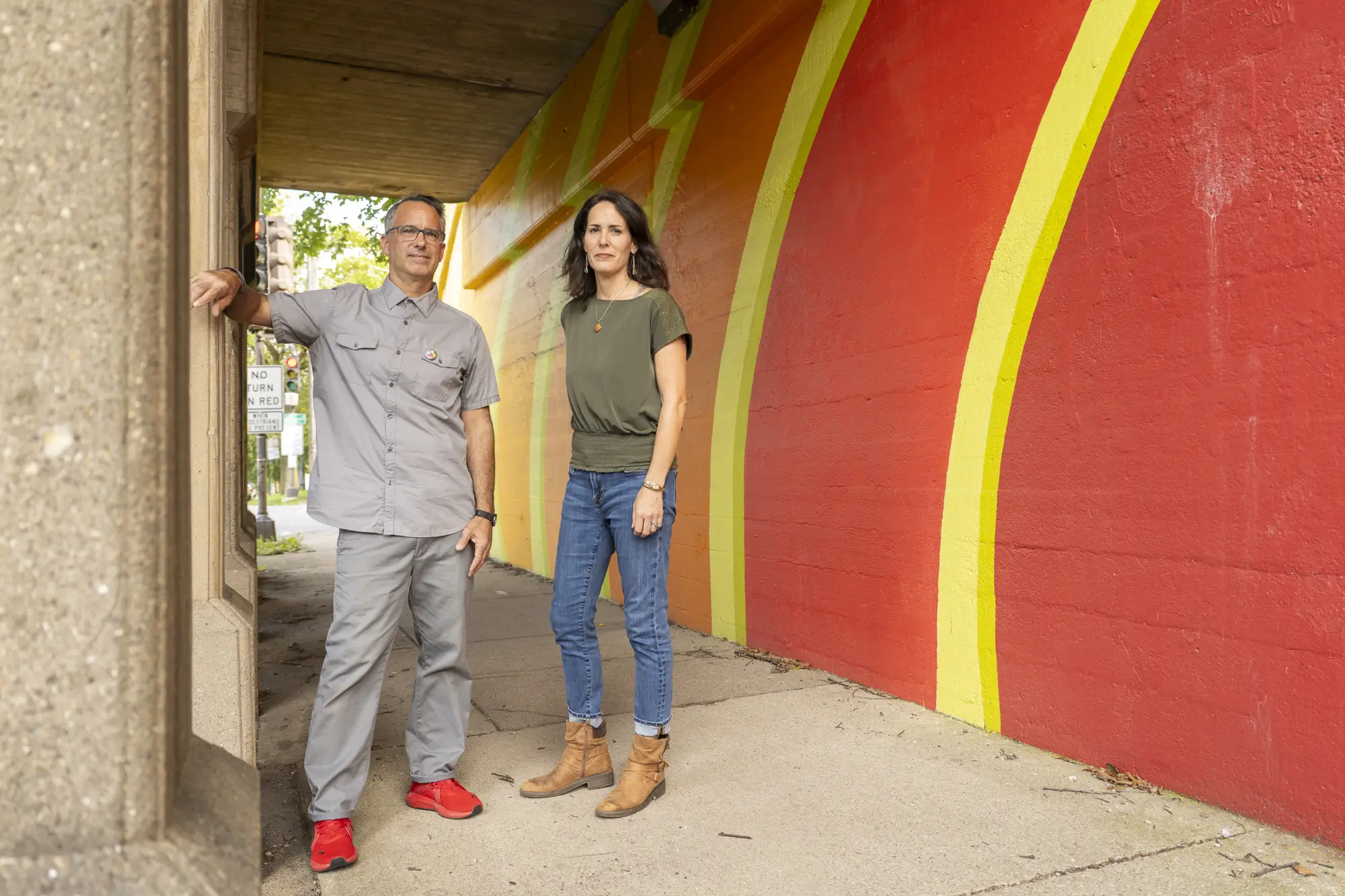
For example, if you spot a wall on the side of a business or apartment building that you think would be ideal for a mural, talk to the owner and ask for permission. If the property is owned by a public municipality, such as the Union Pacific railroad embankment walls, those entities often have stricter and potentially lengthier approval processes and insurance requirements. Also, some public entities only work with organizations or companies who then work with the artists, like Chicago Public Art Group, a coalition of professional artists working to produce public artwork with community involvement. That also could add time.
Build a network of supporters.
Once you’ve identified a promising location for your project, figure out if you need help, Pinsky said. If you would like support for your project, reach out with your idea to your neighborhood chamber of commerce, community groups, local tax districts or non-profits as possible partners. Even if you go it alone — you own the building and have an artist lined up, for example — it’s still a good idea to build support from your neighbors before the work is installed, Pinsky said.
Put the pieces together.
Next: Who will create the artwork? Will you ask for community input? How will you raise money to pay for the project, if it’s not already funded?
If it’s on private property, maybe you have an artist in mind and commission them to create it. If it’s on public property, a group like Chicago Public Art Group could help you solicit artist proposals from which you can choose, with input from the community. The project might be funded by public dollars, a generous individual might pay for it, or folks could fundraise from neighbors and interested groups to help pay for the work.
And then there’s maintenance. “Murals fade, get tagged, or face weather damage,” says Sara Markle, public art project manager of the Chicago Public Art Group. “Sculptures need structural maintenance. A community that wants art on its block should also be thinking, from day one, about who is responsible for its upkeep ten or 20 years down the line.”
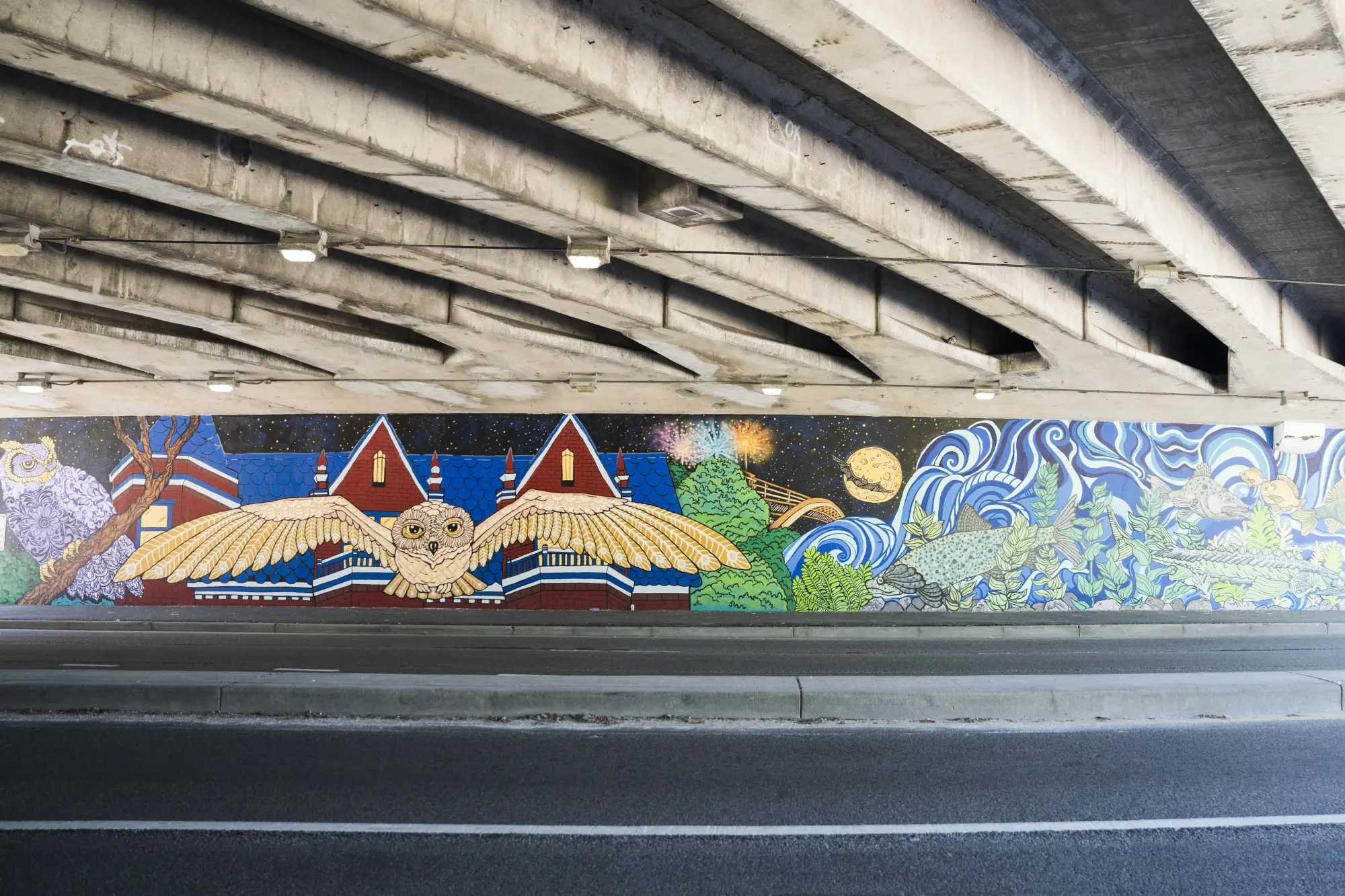
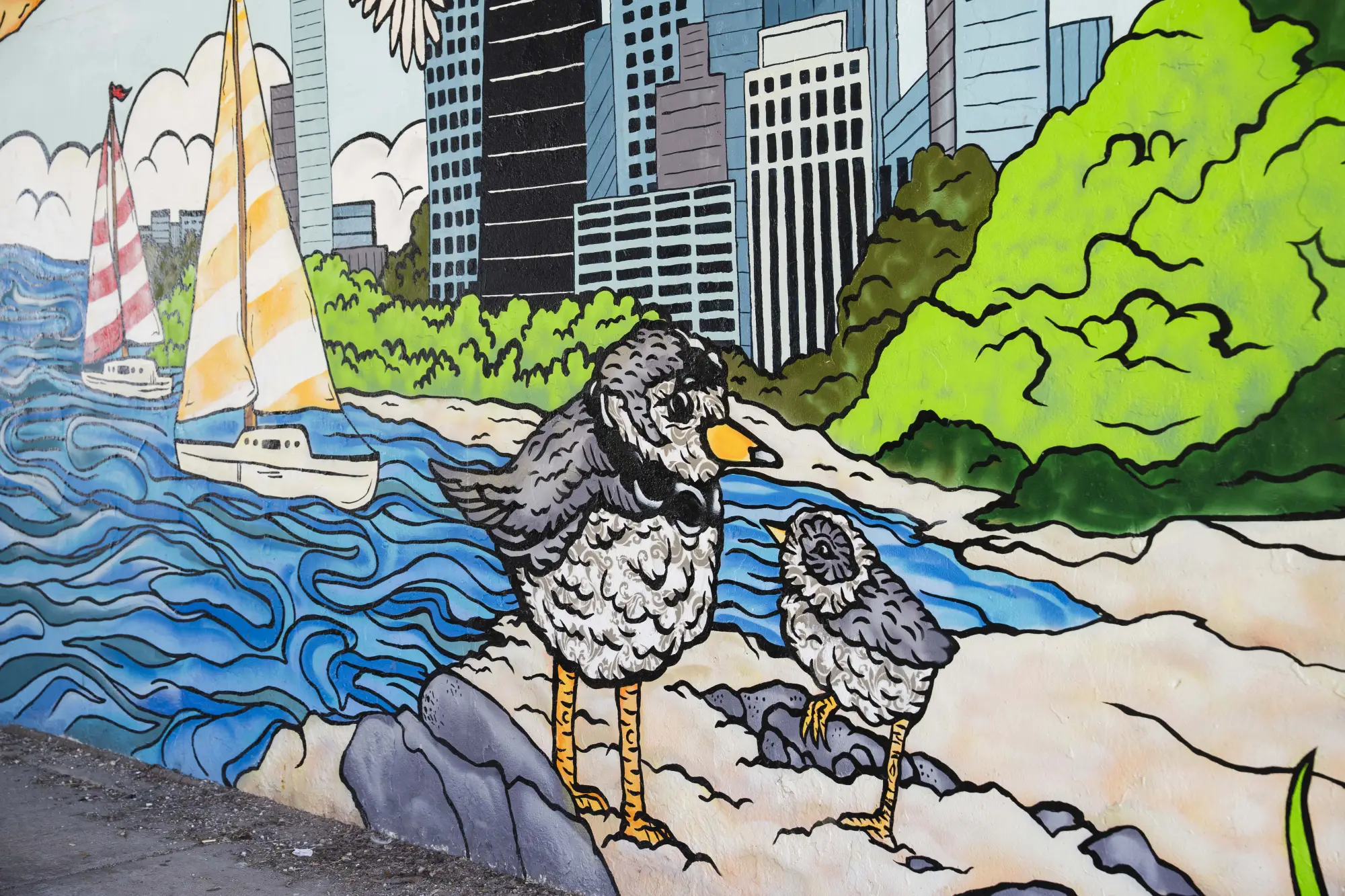
A good example of all the pieces coming together: The two murals in Lincoln Park’s LaSalle Drive underpass, titled “Day into Night: Lincoln Park’s Living Canvas.” The two 100-foot murals stretch through the tunnel connecting the city to North Avenue Beach and feature detailed illustrations of Lincoln Park wildlife under the sun on one side, and moon on the other.
These murals came about after elementary school students Elizabeth and Lillian Jahn asked if their former art teacher, Cheri Lee Charlton, might paint murals in the drab tunnel they drove through every day on their way to school from their home in Old Town.
They held a lemonade stand to help pay for their idea, and raised $300. That was the seed money for the rest of the project.
Next, the girls’ mom, Julie Jahan, reached out to her contacts through her work on the board of Lincoln Park Conservancy. They raised about $50,000 from Lincoln Park neighbors and other supporters to hire Chicago Public Art Group, who shepherded the mural through city permitting and other requirements. Charlton weaved the names of donors into the leaves painted on the mural, which she began painting in fall 2025.
Now, the mural welcomes drivers through one of the busiest exits from Lake Shore Drive.