
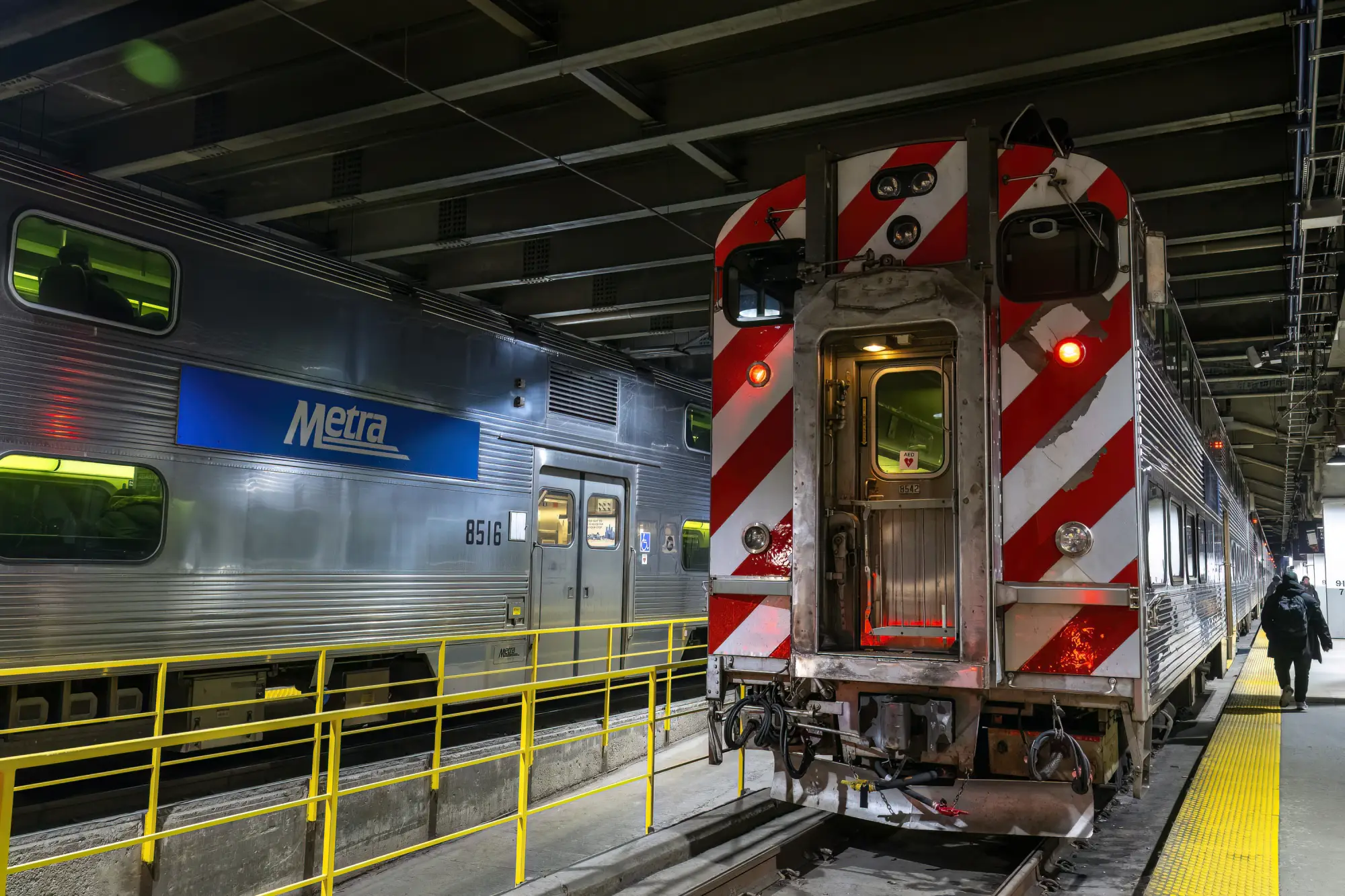
Two Metra trains sit as passengers board at Union Station in Chicago.
- Local Government
How to Master Riding the Metra
Use these tips to ride commuter rail lines with the confidence of suburbanites and avoid costly mistakes.
One of the benefits of being in a major city like Chicago is the plenitude of transportation options to explore the city and its surrounding areas. The Metra is the commuter train system, servicing more than 60 miles out of the city’s downtown area and making it the go-to option for commuters and visitors eager to explore the city.
But the reverse is also true: Metra offers a relaxing and affordable way to see the greater Chicago area. Consider the train instead of driving next time you have tickets to Ravinia in Highland Park, want to take a day trip or plan to see a friend in the suburbs.
The trains are cleaner, bigger and more comfortable than the CTA (although that does mean that tickets are more expensive). However, it does require more planning and knowledge to maneuver its various entry points, routes and ticketing system.
Here’s what you need to know:
Familiarize yourself with how the train lines operate.
There is no single point of origin for arriving and departing trains. Metra trains operate out of four downtown hubs: Chicago Union Station (the oldest and most iconic), Ogilvie Transportation Center, Millennium Station and LaSalle Street Station. Depending on where a person is traveling to or will determine the terminal.
Trains run on a specific timetable depending what day of the week it is.
Buy your ticket before you board.
You can buy tickets from a conductor after you've boarded the train, but if you get on at a station with an open ticket window or working vending machine, you'll be charged a $5 surcharge. Whenever possible, purchase your fare in advance or via a digital ticket. No credit cards are accepted on the train, only cash.
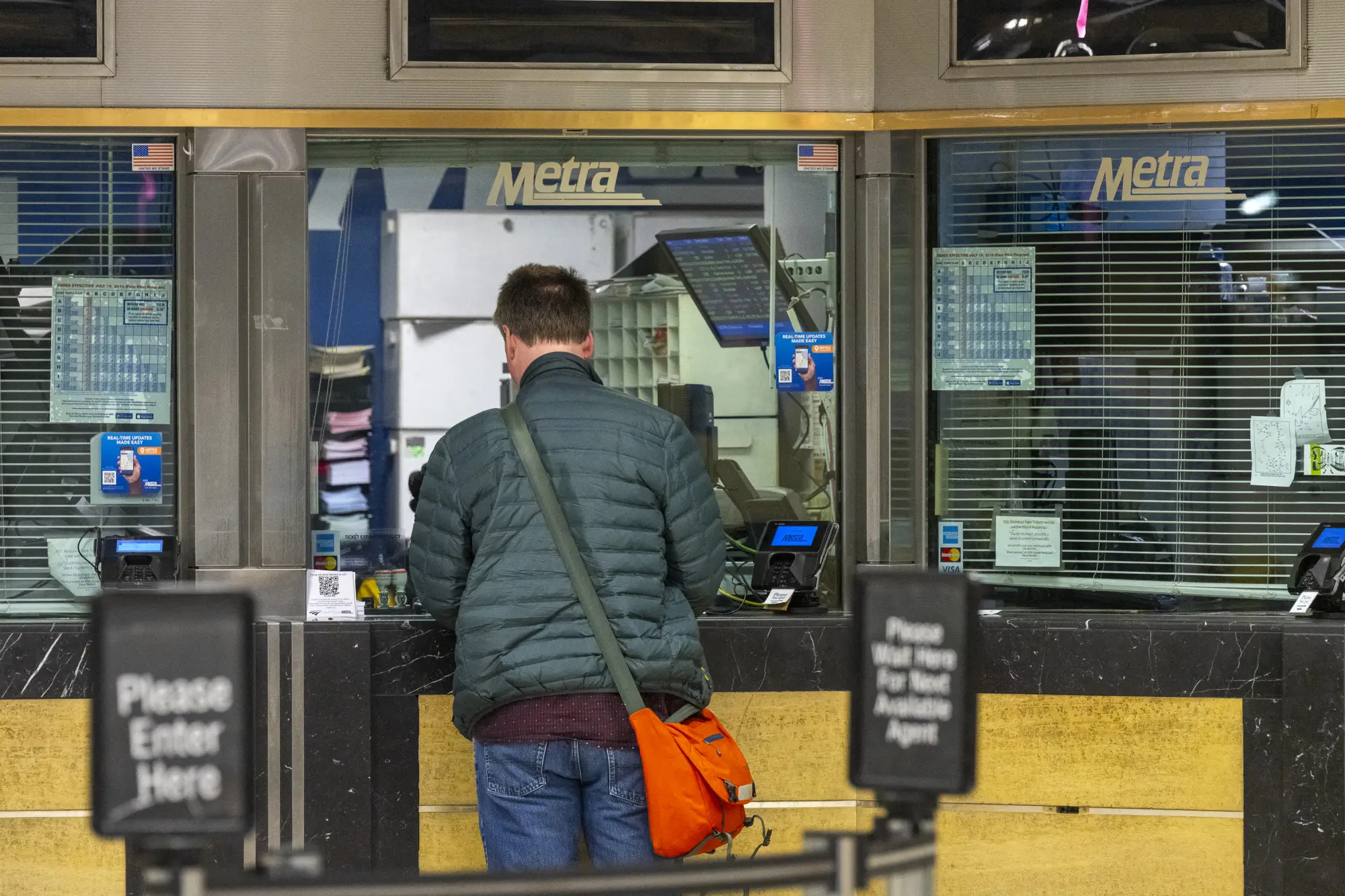
Choose the fare that fits your trip.
Metra uses a distance-based fare structure split into four numbered zones to determine ticket prices. Zone 1 begins downtown and extends outward into the suburbs, with Zone 4 representing the stations farthest from downtown. The farther out one travels increases the ticket costs. However, all one-way trips not entering or ending in Zone 1 (the downtown corridor) cost a flat rate regardless of the actual distance traveled between suburban stations.
Beware though, if caught staying on the train past the zone a rider pays for without letting the conductor know beforehand, it can lead to a $5 fee, plus the cost of the additional zones traveled.
Of course, you can pay for one-way tickets to and from your destination, but Metra offers a number of discounted tickets. Day and monthly passes are available for unlimited rides. There is also a five-pack of rides that offers a slight discount. However the one most inexperienced riders tend to miss is the weekend pass: For $7-$11, depending on the zones traveled, people can ride unlimited times on Saturday and Sunday. This often proves to be the most economical option even when only riding on one specific day on the weekend.
The weekend pass and five-pack rides are only available via the Ventra app.
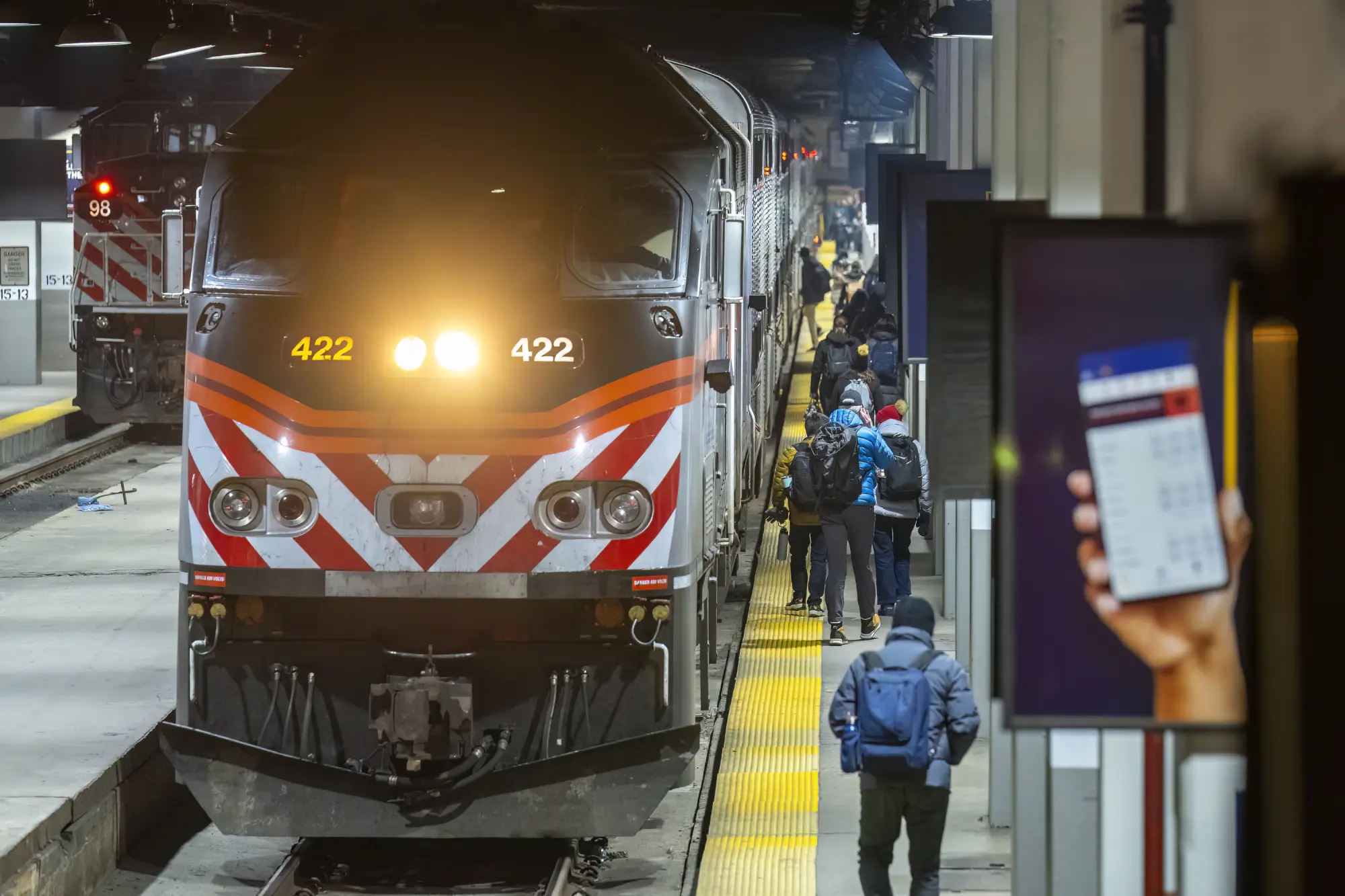
Read the train schedule and boards carefully.
During the morning and evening rush hour trains there are multiple trains running express alongside all-stop trains, in order to speed up commute times between the city and suburbs. This means a train skips past certain stations, which is a perk for experienced riders but can result in newer or distracted folks from missing their stop for miles and having to wait an hour or more for a return trip back. Skip the headache and make sure your station is listed on the timetable (displayed on a marquee when you enter the boarding area).
When in doubt, arrive early and double check with a conductor.
This is easier to do when leaving from any of the downtown ports. It’s a bit more difficult when boarding in the suburbs where it can be hard to tell which way is downtown. If there are no other riders around to ask, read the signs carefully to ensure you’re boarding on the correct side.
Know the quiet car rules.
The Metra takes its quiet car rules seriously. No phone calls are allowed and conversations are discouraged. Electronic alerts must be muted, and any audio should be low enough so that only the person who is playing the sound can hear it. These trains operate during the morning and evening rush. They are marked on the outside and inside with decals but are typically the second car from the locomotive (short rides where the train is only two cars do not have quiet cars).
There are no official fines — but be prepared to receive dirty looks from other riders and a warning from the conductor.