
- Food & Drink
How to Order Chicago Classics Like a Local
Dishes like Harold's fried chicken, jibaritos and Chicago-style hot dogs have their own vocabulary and customs. We went straight to the pros for guidance.
Does the order of ingredients in a Chicago-style dog matter? What does “sweet and hot, dipped” mean exactly? And is ketchup permissible under any circumstance?
There are certain foods that are unique to Chicago but can be mystifying to the uninitiated. For example, the gym shoe sandwich (sometimes spelled "jim" shoe depending on where you go) is a behemoth of a sandwich, typically boasting three different kinds of meats — gyro meat, corned beef and roast beef, under a blanket of cheese — piled high on a sub roll and topped with a blizzard of iceberg lettuce, sliced tomato, mayo, mustard and tzatziki sauce; you can sample one at Southtown Sub (112 E. 71st St.).
Spots that serve Chicago classics are generally friendly and forgiving of confused novices. But, we’re here to help you order the iconic classics like a pro: Italian beef, a jibarito, a Chicago-style hot dog, a Maxwell Street polish, and fried chicken at Harold’s. When you step up to the counter, you’ll be ready.
How to order an Italian beef
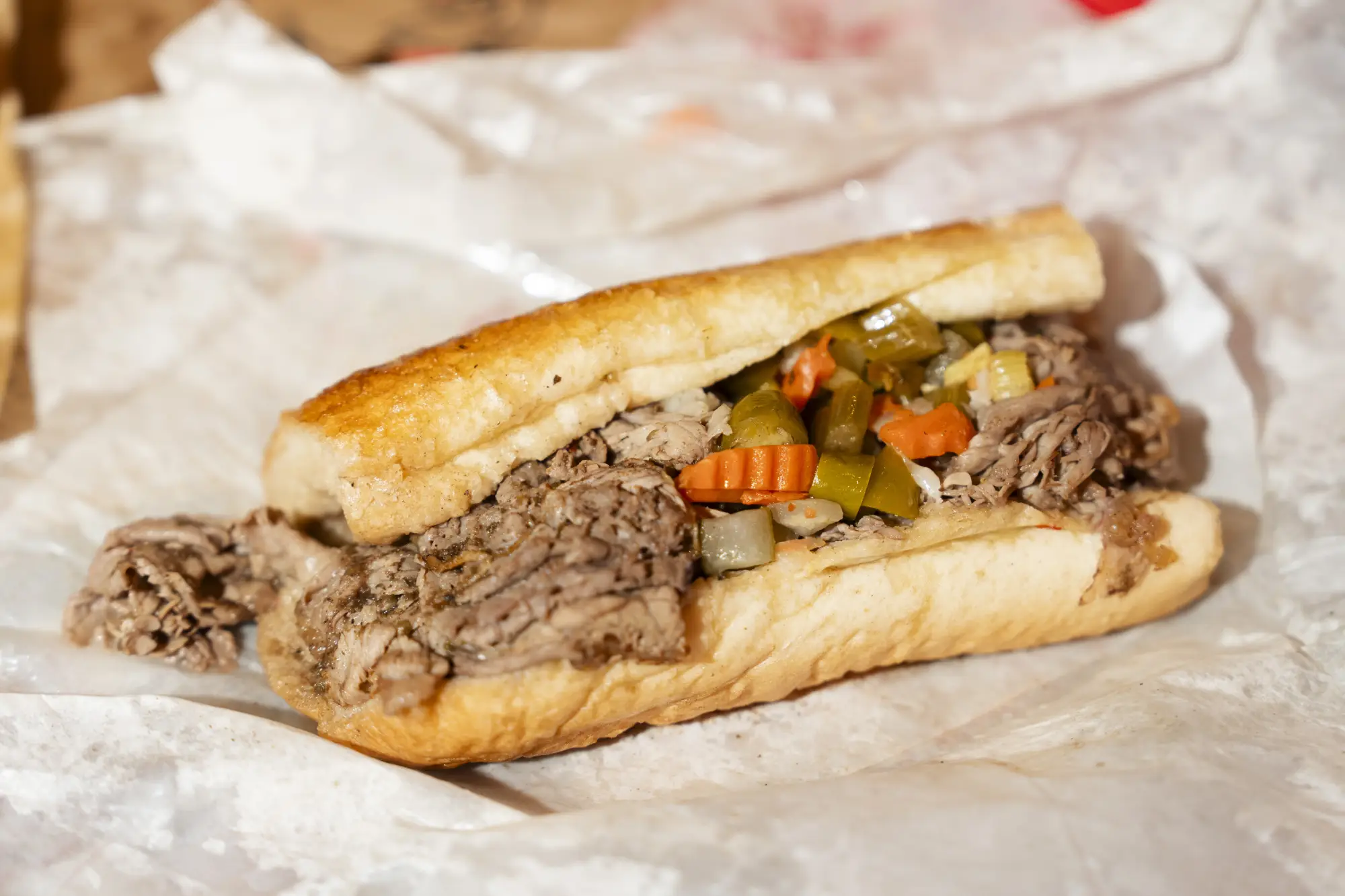
Beef, sweet and hot. Dipped.
“That’s how I was raised ordering beefs,” said Jeff Mauro, founder and CEO of Mauro Provisions, a suburban Lisle-based company that sells “Chicago-centric” food products like Italian beef and giardiniera, and co-host of Food Network’s “The Kitchen.”
An Italian beef typically comprises slow-roasted beef, thinly sliced, served on a sturdy roll (he’s partial to Turano’s French rolls because the sandwich stays structurally sound when dunked in au jus) and then served either dry or dipped in the au jus. Finally, it’s topped with peppers.
There are only a couple variables when it comes to ordering an Italian beef, Mauro says: the level of wetness of the beef and the type of peppers.
The verbiage varies by business, but dipped and wet mean essentially the same thing: The sandwich has been dunked briefly in the au jus but the variable is how long it’s submerged in the rich, aromatic liquid glossy from the fat drippings. “Baptized” is another term, which is “just an extra long spiritual dunk in the gravy to get it sopping wet.”
You can forgo the dunk but Mauro’s preference is to get it dipped because that adds another dimension of flavor.
“A dry beef can be good, but [for him] it’s got to be dipped. … There’s so much spice and some aromatics and herbs in the au jus.”
The other variable is the type of peppers, which can be sweet (roasted bell peppers) or hot, which is always giardiniera, Mauro says, adding, “No jalapenos, no banana peppers, no cherry peppers. You can’t call yourself a true Chicago-style Italian beef or a true Chicago beef stand unless you’re using oil-packed Chicago-style giardiniera.”
For Italian beef newcomers, Mauro’s first question: Are you spice averse? If so, then he would advise to go for sweet only or to go easy on the hot. “Just give me a beef, sweet, easy hot. That’s a good introduction into the world of Italian beef.”
If you dislike peppers, either bell peppers or chiles, then just get a beef dipped. Plain is OK.
And if you’re ready to venture beyond the beef, get the Italian beef-sausage combo, Mauro says.
Whether you’re a sweet or hot, wet or dry, kind of Italian beef eater, if you ask for wet/dry before sweet/hot, no sweat — the order of how you order doesn’t really matter, according to Mauro. But what’s more important is that you know what you want when it’s your turn at the counter.
“You got to be as succinct as possible. That’s the key. … Don’t take forever because other people want to get their orders in,” Mauro said.
But what does matter is what you don’t get on it. “Please, no matter what, people always talk about no ketchup on a hot dog. Do not put ketchup on a beef ever. I think that's even more egregious.”
How to order a jibarito
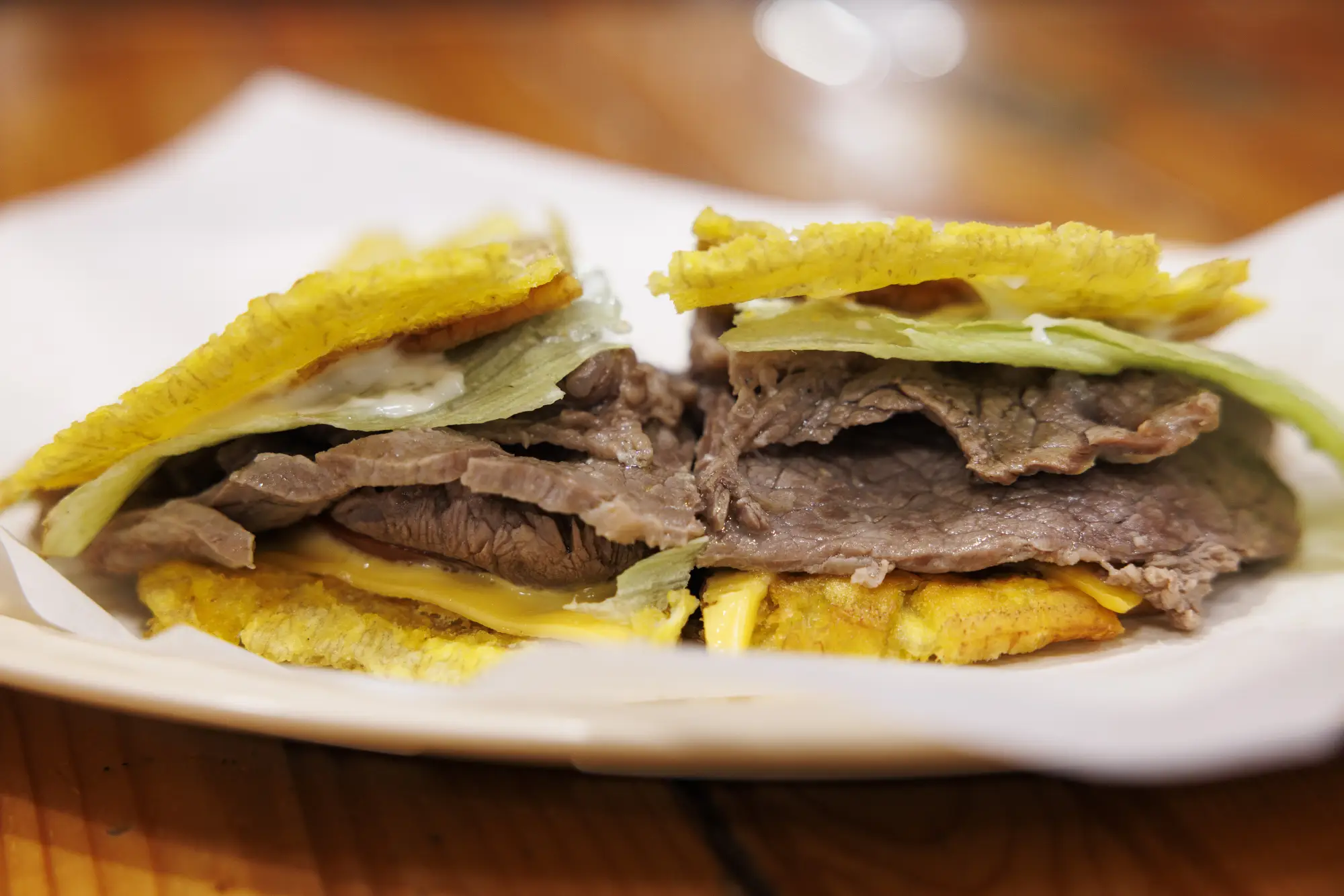
After reading about plantain sandwiches in a Puerto Rican newspaper in the ’90s, Juan “Peter” Figueroa layered steak, tomato, mayo, cheese and garlic between two pieces of plantain, and served it to his father. He loved it so much that he encouraged his son to start selling it at his restaurant Borinquen (1720 N. California Ave.).
Customers embraced it right away, said Gabriela Figueroa, the niece of Juan, whom the family calls “Uncle Peter.”
“It was something new and cool, especially in the Puerto Rican community, [where] it just became so popular so quickly,” said Figueroa of her uncle’s creation at the original Borinquen location in Humboldt Park.
Since then, many restaurants across Chicago serve jibaritos. Figueroa said her uncle never wanted to gatekeep the sandwich so there are many different types of jibaritos, but the Figueroa family is proud to claim it, having gotten a trademark in Illinois a few years ago.
For Figueroa, the ideal jibarito has the right amount of ratios for each ingredient in order for it to work.
“You can’t have a super thick piece of tomato. You can’t have too much steak on there. You need to have like the right amount of every ingredient so that the sandwich works. You also need to have fresh plantain,” Figueroa said.
The plantains at Borinquen Lounge (3811 N. Western Ave.) take 10-15 minutes to prepare and they are freshly smashed before they hit the oil. “If you have a fresh plantain, the right amount of meat, and the other ingredients, it'll be a perfect sandwich.”
Figueroa says her cooks lay down the cheese on top of the freshly fried plantain, which results in perfectly melted cheese, then the meat or vegetable filling, followed by lettuce, tomato and a blend of oil and garlic. The other plantain tops it all off.
The original filling as Juan Figueroa made the jibarito is steak, but for Figueroa, her favorite is the lechon, which is roasted for eight hours and then sits in its juices for a moist and flavorful pork. Both are Borinquen’s top sellers. Over the years the restaurant has added other fillings, such as fried chicken, grilled chicken, a vegetarian version with green and red peppers and onions, and two shrimp options: shrimp in garlic sauce or shrimp in tomato sauce.
For those who have never had a jibarito, Figueroa always suggests they start off with the original.
“I always just guide them in that direction if it’s their first time at our place, just go with steak, yellow rice [with pigeon peas] and don’t add anything, and don’t take anything off. Just try it, and you know, 99% of the time they love it as is.”
How to order a Chicago-style hot dog
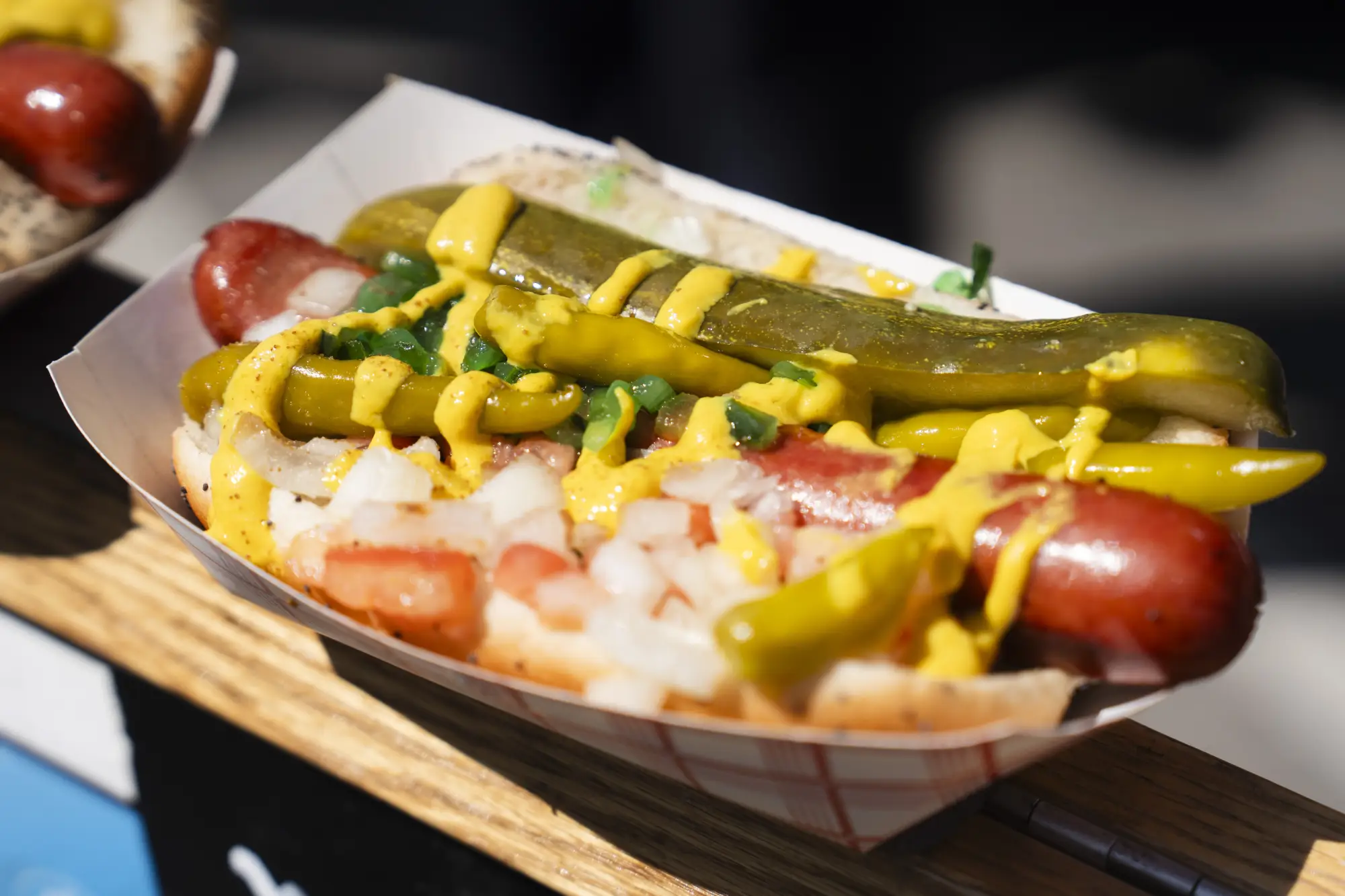
A properly constructed Chicago style hot dog begins with the right components and ingredients, according to Bill Murphy, who started his Lake View stand Murphy’s Red Hots (1211 W. Belmont Ave.) in 1987 with his wife and ran it for over 30 years. Today he is director of Vienna Beef’s Hot Dog University (2501 N. Damen Ave.).
Those components include: a bun, preferably poppy seed, but whether it has seeds or not it needs to stand up to steam; yellow mustard, sweet relish (immediately recognizable by its neon green color), chopped onions, tomatoes, a pickle spear, sport peppers, celery salt and the hot dog, either a natural casing or skinless.
The trinity of yellow mustard, relish and onions (ideally Spanish because of its sweetness, crunch and texture,) creates a magical combination, Murphy says.
“[The tang of the mustard] goes very nicely on the hot dogs. So when you add that sweet green relish, and then those Spanish onions — they’ve got a bit of a zing to them, but they’re actually sweet. And the sweetness of the onions and the relish tempers the mustard on top of that beef frank … that’s where the magic happens.”
A common misconception, Murphy says, is that you have to have everything on a Chicago-style hot dog. “Part of the Chicago dog experience is that a person actually gets to choose what they want on their hot dogs within that set of parameters.”
Murphy likes to get mustard, relish, onions and sport peppers, which he says is “the original Chicago hot dog.” The celery salt, tomatoes and pickles came later.
For the Chicago-style hot dog uninitiated, Murphy will always try to encourage customers to get as much as they can on their dogs, especially the relish, which is an ingredient many people will shy away from in Murphy’s experience. He’ll then challenge them to try it with the relish and if they don’t like it, he’ll make them another one.
“Maybe nine out of 10 that take the challenge will come back and say, ‘Can I have some more relish on that?’ … I would always encourage someone to give it all a shot, but to have fun ordering, that’s a big part.”
One ingredient that is not within the set of acceptable Chicago-style hot dog parameters is ketchup. A big reason is that ketchup overpowers the dish, Murphy says.
“Ketchup throws the whole balance of the sandwich off and and if you like ketchup on your hot dog, it's really more about you liking ketchup than you do hot dogs. You're just using a hot dog as a conveyance to consume ketchup,” Murphy said.
Outsiders may think the prohibition on ketchup on hot dogs is a schtick, Murphy says, but there is a reason behind it.
“If ketchup made a hot dog better, it would be on it,” he said.
How to order a Maxwell Street Polish
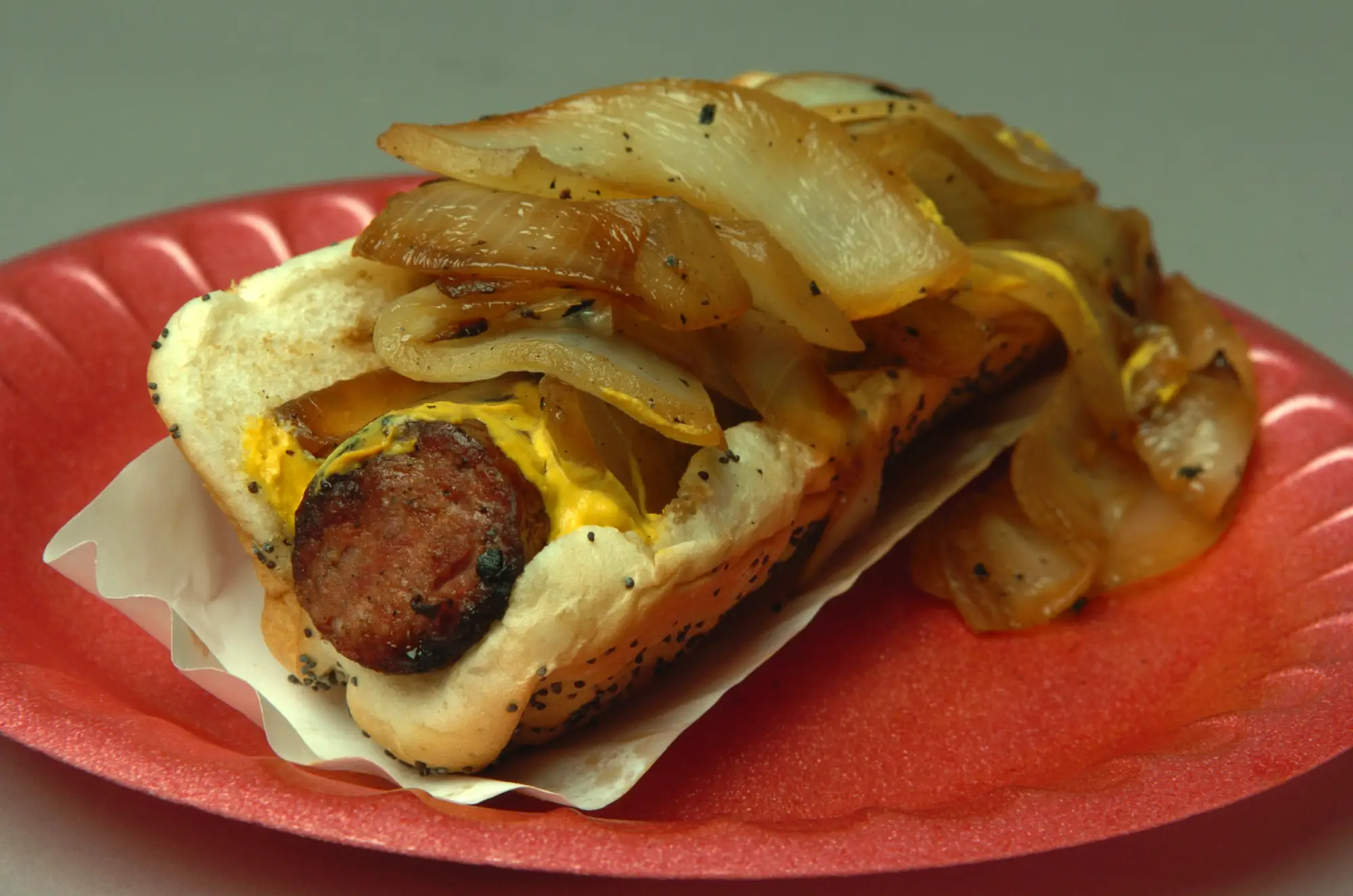
A Maxwell Street Polish sausage sandwich is fairly simple with only five components — bun, sausage, caramelized onions, mustard, sport peppers — but each ingredient plays a key role.
The sandwich starts with a 12-inch natural casing Polish sausage that’s cut in half, Murphy says, and it’s then cooked on a flat-top griddle, a key step in a classic Maxwell Street Polish sausage sandwich.
“It’s been simmering on a griddle, so the juices are under pressure to push out of it,” he said.
A true Maxwell Street Polish is a 12-inch sausage cut in half, according to Tom McGlade, senior vice president of marketing at Vienna Beef. “That’s why one side of that Maxwell Street Polish, when finished, is flat, whereas the other side is rounded because that’s the left or right-hand side of the original sausage, and it has a very interesting look and feel to it when it’s a finished product being served.”
At the time the sandwich was invented — first created at Jim’s Original (1250 S. Union Ave.) in 1943, according to its website — the size of casings weren’t as varied as they are now, McGlade says, which is the reasoning behind cutting the sausage in half to make a 6-inch sandwich since the 12-inch was readily available.
The next ingredient is onions, which must be caramelized and not grilled, Murphy says. “Most people say grilled onions, but truly, the best Maxwell Polish, the onions will be caramelized, meaning they’re cooked much longer than a grilled onion and reduced to the point where they’re almost like a jam.”
When it comes to ordering a Maxwell Street Polish, like the Chicago-style hot dog, everything is optional and will depend on what the customer prefers, Murphy says. But there’s a reason why the specific combination of mustard, caramelized onions and sport peppers work so well on a Maxwell Street Polish sausage.
“It’s the way these condiments complement and enhance and and work beautifully with each other. But everybody’s a little different, and that’s part of what I think also creates part of the experience.”
How to order fried chicken and mild sauce
Toure Muhammad, known as Black Chicago Eats on TikTok, saw on social media that someone was upset with another person who didn’t know how to order at Harold’s Chicken Shack and he felt bad for the harsh response the fried chicken rookie got.
“The first time you go in [to Harold’s], if you didn't order or go in with your parents, you don't know, right? Or if you just moved to the city.”
That prompted him to post a video advising people on how to “move in the land like a real Chicagoan.”
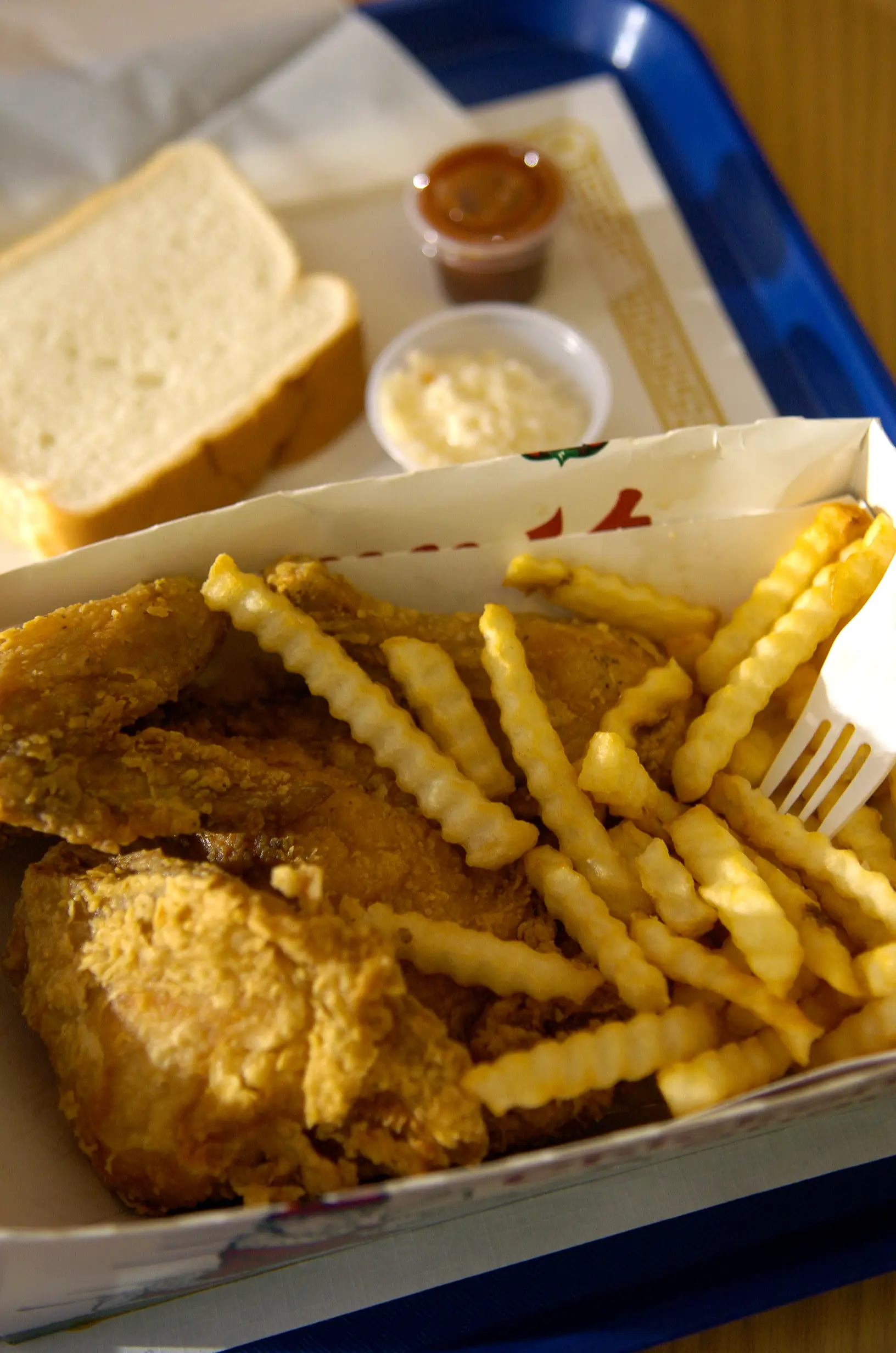
“Give me six wings, fried hard, mild sauce, hot sauce, salt and pepper. That’s how you order,” he said in the video filmed at the Harold Chicken Shack in Bronzeville (503 E. 47th St.). Opinions vary widely among Harold’s Chicken Shack fans on which location is the best, but some of the most popular ones include Grand Crossing (407 E. 75th St.), Chatham (129 W. 87th St.) and West Pullman (12700 S. Halsted St.).
There are nearly 40 Harold's Chicken Shacks, according to the corporate office’s website. Most of the independently operated and owned franchises are located in Chicago, with a few others sprinkled across the country. There have also been unauthorized Harold’s to open up over the years; recently the corporate office posted on Instagram that “there has been a rapid increase in the opening of locations operating without proper authorization or procedures,” listing nine businesses. So if it’s the authentic Harold’s Chicken Shack’s fried chicken and mild sauce you’re after, make sure it’s one of the authorized locations.
To order, first you select what piece of chicken you want. You can get white or dark meat but “predominantly people are getting wings,” Muhammad said.
Next, fried “hard” means frying longer so the skin stays crispy when drizzled with mild sauce. The mild sauce is what makes this a Chicago experience. The condiment started popping up at Black-owned fried chicken shacks and barbecue joints in the 1950s and 1960s on the South and West Sides, with Harold’s Chicken Shack and Uncle Remus staking early claims to mild sauce. This uniquely Chicago creation typically has ketchup, barbecue sauce and hot sauce.
Depending on where you go, mild sauce can be on the tangy side or might have more barbecue flavor, Muhammad says.
The finishing touch is pepper, a choice that will depend on the generation, Muhammad says.
“I am 56, so [I order] salt and pepper. My daughter, a millennial, will ask for lemon pepper.”
Fries, with sauce drizzled on top or served on the side, and a slice of white bread round out this classic Chicago meal.
While this is the order Muhammad recommends at Harold’s, it’s a good blueprint for other fried chicken joints in the city.
“If you go anywhere else that has fried chicken and mild sauce, and you follow this general order, you should be good,” he said.