
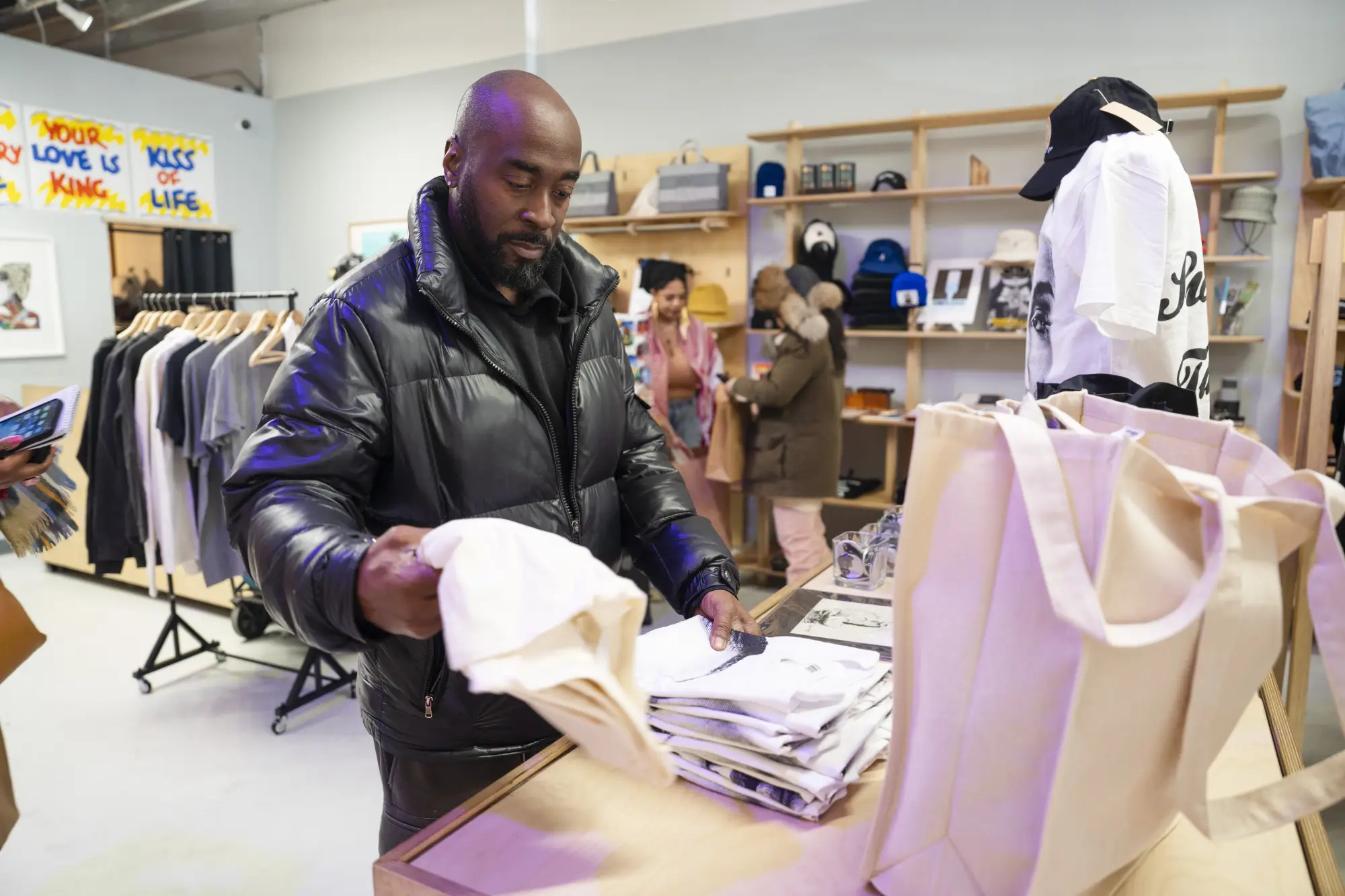
Eric Williams arranges merchandise at The Silver Room, his flagship store in Hyde Park.
- Arts & Culture
How to Support Local Businesses That Need It Most
Shop consistently, spread the word and support policies that help neighborhood businesses stay open and resilient.
Chicago neighborhoods are more than its buildings. The restaurants, shops and various small businesses that inhibit its storefronts are what give each community — and by extension the city — its distinct identity.
These mom-and-pop shops often shape a neighborhood’s cultural DNA. For example, today’s Wicker Park grew up around The Violet Hour, the trailblazing cocktail speakeasy located at 1520 N. Damen Ave. before closing in 2025. Hyde Park is anchored by The Silver Room (1506 E. 53rd St.), a retail shop known for community, art and fashion. In Lincoln Park, The Weiner's Circle (2622 N. Clark St.), the hotdog shack with its famously abusive customer service, has arguably brought more character to the neighborhood than any other business (sorry, Alinea and Steppenwolf).
Yet as a place evolves and trendier businesses move in, the small businesses that helped make these places interesting in the first place can easily be taken for granted. And, in some cases, they get pushed out completely.
But it doesn’t have to be that way. Here, we talked to small-business owners about ways to support your favorite neighborhood spot and ensure it stays around for as long as possible.
Make local spending a habit.
Spend what you can, when you can, but understand that recurring sales offer greater support than one-time engagements. Regular and repeat business (such as subscriptions, private events and referrals) offers small businesses stability by creating predictable revenue streams.
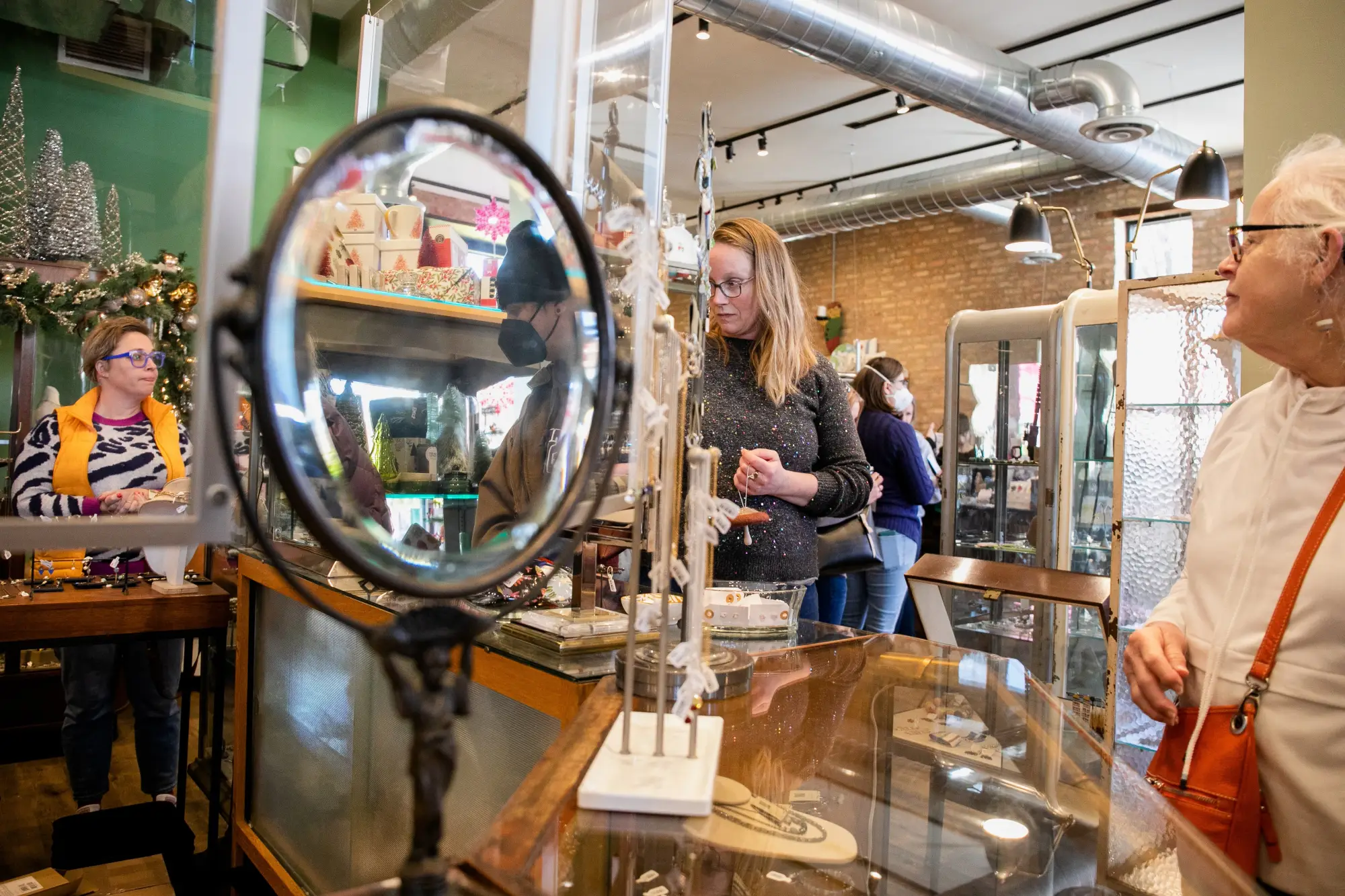
“For small businesses operating on thin margins, guaranteed revenue creates stability in a way that simply opening the doors and hoping for sales cannot,” said Jackson Flores, executive director of Hilo, a small business development center. “Supporting local should be part of our routine, not something we only rally around when a business is struggling or about to close.”
Put your network to use.
Beyond sales, Flores encourages people to open their networks up to their favorite business, in order to support entrepreneurs who might be strapped for time.
“Networks are a form of capital, and many small business owners don’t have the same access as corporations or bigger competitors,” Flores said. “That leaks over into staffing where a start-up might not have the resources for a leadership team to help them assess the financial health of the business, identify vulnerabilities or help with making more strategic decisions. Providing networking assistance can sometimes be more valuable than making a purchase.”
This can look like flagging a grant opportunity, providing a recommendation for a great accountant, or making the connection to a journalist who can spotlight the work being done to a larger audience.
Give your favorite businesses a boost online.
“People often overlook word of mouth,” said Omotola Akinbiyi, the owner and operator of Bon Femmes in Ravenswood. “The very first answer on how to support a small business is to shop with us. That helps. We love that. But the reality is, we know times are tough. Not everyone has the funds, but posting on your stories, writing a review and signing up for a business’ newsletter goes a long way.”
Engaging online with your favorite shop, restaurant or hair salon, creates a path for online algorithms to work for the business and help reach new customers. A like, share or comment from a third-party validator goes a long way in generating sales.
Demand a city process that works.
Operating a business is difficult. Add-in the challenge of navigating the landscape for obtaining licenses, permits and going through inspections for a brick and mortar location, and it can be a herculean feat for an entrepreneur to open its doors. Bureaucracy can prevent small business growth and requires engaged citizens to stay informed and keeping its local leaders accountable. In Chicago, these matters are led by the city’s Business Affairs and Consumer Protection department. Flores says that minimizing turnover and better planning would alleviate the difficulties small business owners face.
“A business can spend months working with someone who leaves, only to find there is no backup contact, transition plan or clear path forward,” said Flores. “Continuity and accountability matter.”
She also sees this as creating a clearer, more accessible path for small businesses to become approved vendors for the city, Chicago Public Schools or larger institutions that can open the door to bigger, recurring contracts which in turn can generate more sustainable revenue.

Back stronger protections for commercial renters.
“City programs encourage entrepreneurs to invest in permanent improvements on the façades, plumbing, electrical sometimes requiring the business owner to contribute 25% of the project cost,” Flores said. “Those improvements stay with the property and can increase its value, whether or not the business gets to stay. If public dollars and small business capital are being used to improve privately owned real estate, there should be protections for the commercial tenant making that investment.”
Flores has worked on three different businesses that invested more than $50,000 into a leased commercial space, only to have the building sold out from under them. She says this happens more often than people realize and raising awareness is an important step in bringing about change.
Support businesses before they need rescuing.
“We spend too much time trying to rescue businesses instead of investing in the infrastructure that helps prevent the crisis,” Flores said. “A cash injection doesn’t save a business, it funds a slower failure.”
Systemic issues like complicated bureaucracy, weak renter protections or gatekeeping information can contribute to challenges small businesses face but consumers can rally against that with the money in their wallets.
“People just need to shop local,” said Eric Williams, the owner of The Silver Room in Hyde Park. “I know it sounds so corny, but it's true. It's easy to buy on Amazon, but when your neighborhood is blighted, that spending decision is why. At the end of the day, just coming in and buying something is the best way to support us.”