
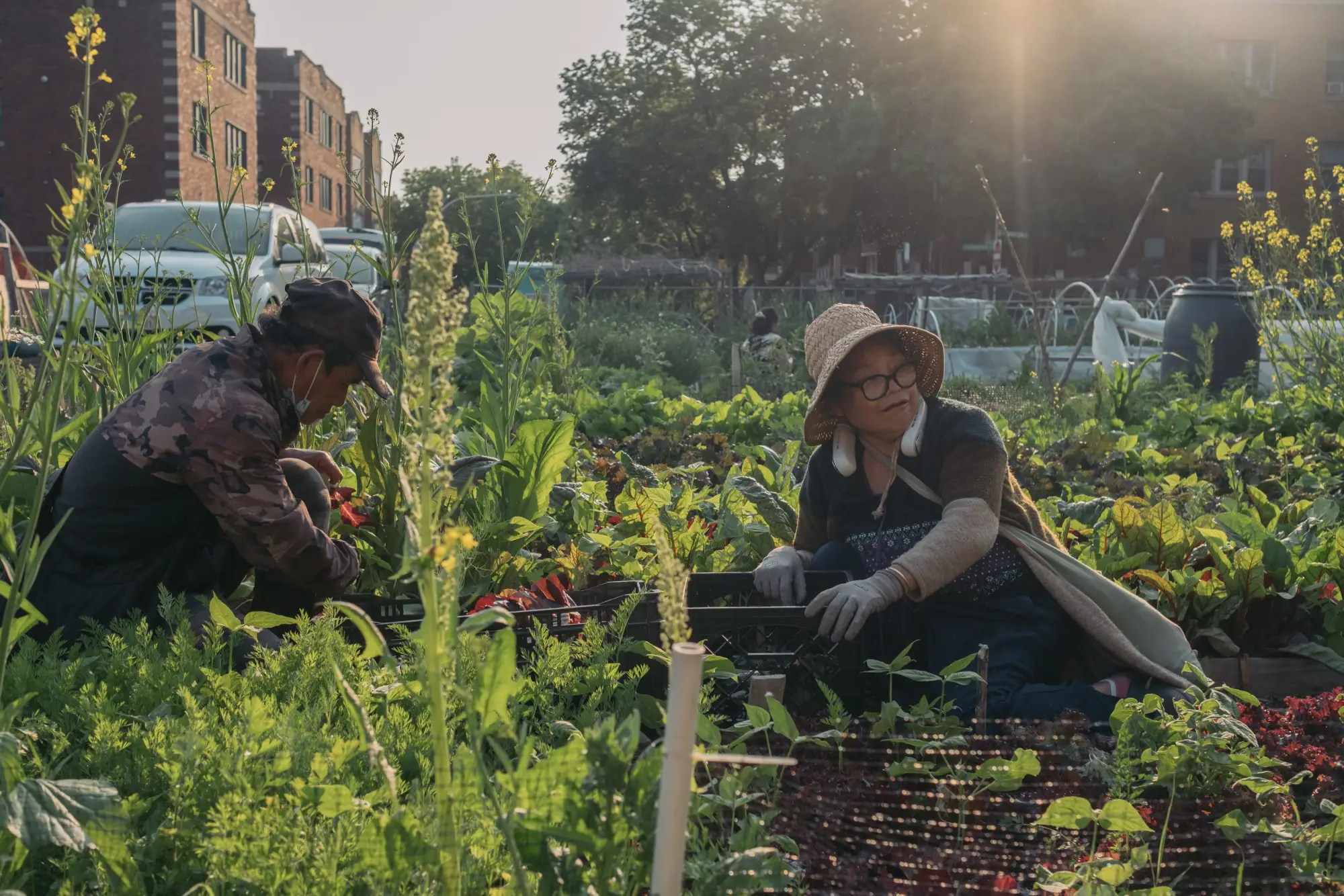
Pah Ka Tee (left) and wife Pu Bye, refugees from Burma, pick vegetables from their plot at the community farm run by Global Gardens. The one-acre farm, at Sacramento and Lawrence Avenues in Albany Park, hosts 58 family plots.
- Local Government
How to Turn a Vacant Lot Into a Community Resource
A vacant lot can become a garden, gathering space or housing — but first you’ll need to find its owner, secure the land and rally support.
There are nearly 10,000 vacant lots in Chicago, mostly, the city estimates, on the South West and West Sides. They can attract trash and crime. They decrease property value and raise insurance premiums.
Maybe there’s one in your neighborhood, one you’re hoping to transform into a community gathering space. One day it’s a barren lot — the next, it’s on its way to becoming a play lot, affordable housing or an urban garden.
First, find out who owns the lot.
Let’s say you have a specific vacant lot in mind.
The first thing to do is go to the city zoning map, says Ben Helphand, executive director of NeighborSpace, a Chicago nonprofit urban land trust that preserves and sustains gardens on behalf of community groups. Search by address, zooming into individual lots and property index numbers, and learn more about the lot’s ownership status. You may discover it's owned by the city, a private party, the Cook County Land Bank or Chicago Housing Authority, Helphand said.
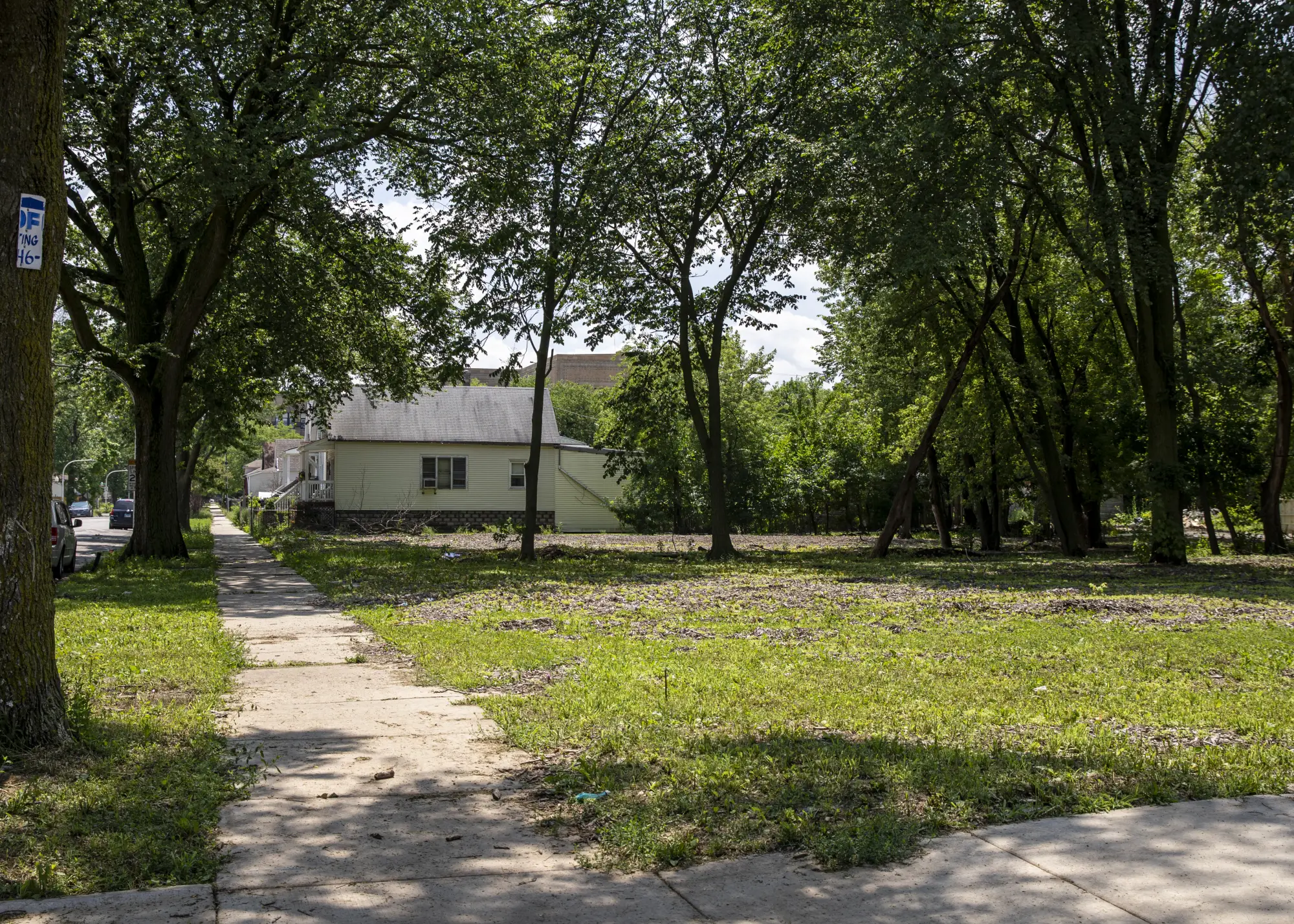
But this process is not always so straightforward, he said, as the site may not provide important details, such as the owner’s name, address or phone number. For instance, you might find that a lot is tax exempt. That means it's owned by a public entity, but the map won’t necessarily tell you what that public entity is. “You’ve got to dig a little bit sometimes,” Helphand said.
If a lot is privately owned, the city zoning map won't have the owner’s name and contact info. In this case, you could go to the county or the tax assessor’s website to see who is paying the taxes. You could also ask your alderperson for help; he or she can ask the Department of Planning and Development to figure out who owns it.
Helphand says NeighborSpace has been stumped on occasion by lots whose owners can’t be determined, has an absentee landlord, are owned by an LLC (limited liability corporation) that was formed to obscure ownership, or that are owned by someone no longer alive and with no living relatives.
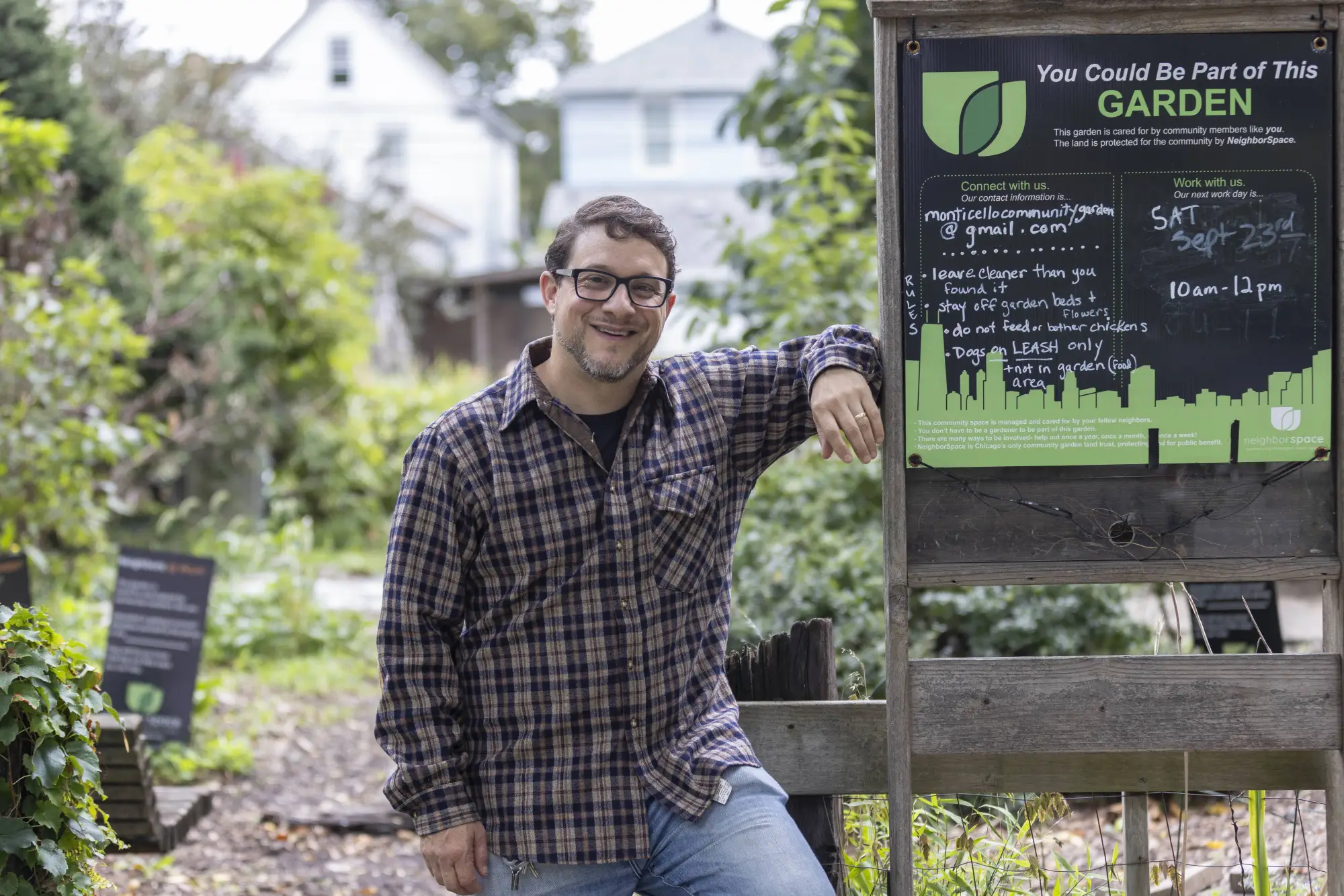
“We had a case [in Kenwood] where it was land that had never been developed, where there had been, like, an actual carriage house — like horse and buggy — a long time ago,” he said. “Somebody’s descendant owned it, but there were no living relatives.”
To search for lots owned by the city, ChiBlockBuilder is your source.
Led by the Chicago Department of Planning and Development, ChiBlockBuilder makes it easier to identify and buy city-owned properties on the South and West sides.
Enter an address, community or ward to see what’s available. If you see one you like, fill out a form to determine whether you’re eligible to apply. Residents, developers, community organizations are all eligible to apply for side yards, housing, commercial projects, and open spaces such as gardens or plazas.
Move quickly when a lot becomes available.
You’ll want to act fast — applications are only accepted for 45 or 90 days after a lot is listed for sale. If a lot is not listed for sale, you can ask to be notified when it comes up.
City-owned lots cost anywhere from $1 to full-market value, depending on what you’re looking to do with the land.
Developers interested in constructing affordable housing can buy lots for $1, as well as up to $150,000 in construction assistance per unit. You can also get a lot for a buck if you pledge to use the land for urban agriculture for 10 years. Of course you’ll also have to pay for closing costs, future property taxes and any environmental cleanup.
Developers planning to build traditional residential or commercial housing will pay market rate.
Band together with neighbors.
If you are wanting to start an open space fenced and managed by a resident, group of residents, nonprofit organization, or business for local neighborhood activities, expand your yard or start an urban farm on a city-owned lot next to your property, you can typically snag it for 10% of the lot’s assessed market value.
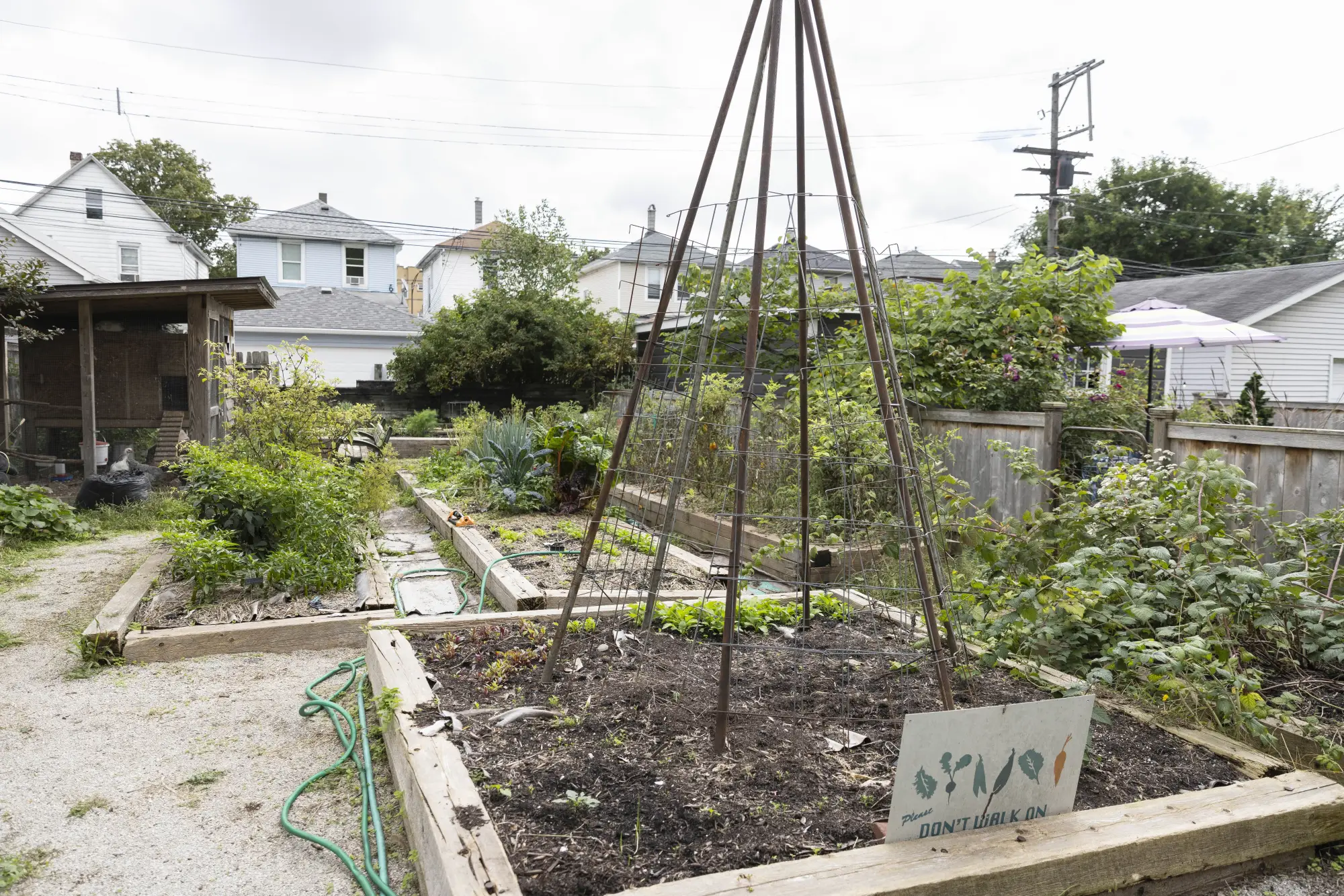
Linda Seyler turned a vacant lot into a fruit and vegetable garden in Albany Park, and it’s now a thriving nonprofit called Global Gardens. A community garden at 71st and Crandon in South Shore was built on three vacant lots. Community Roots Community Garden at Skinner Park in the West Loop was also made from vacant lots.
Turning a vacant lot into a thriving neighborhood resource is “not a completely linear process,” Helphand said. “You got to build support, work with elected officials, work with your neighbors, and if everything lines up, then it can move forward.”